

“The terrible thing is that it’s impossible to tear the past out by the roots. Impossible to tear it out, but possible to hide the memory of it.”
Nation states are famously capable of the most cynical and contradictory behaviors one can imagine. One that stands out from the past, but with massive impact on current events today is U.S. policy on Ukraine in the post-World War II period.
At the outset of the Cold War, the U.S. Central Intelligence Agency (CIA) financed and engaged with anti-Communist Ukrainian nationalist fighters and ideologues in an effort to wrest Ukraine from the Soviet Union. Many U.S. resources were spent trying to understand the intense rivalries between different groups and personalities, determining which Ukrainian nationalist factions to back, as well as organizing covert intelligence and sabotage missions, which sent some of these people, then in exile, behind Soviet lines.
As an example of the kind of operations the CIA ran at that time, see the October 1948 report, “Project Icon: Postwar Ukrainian Exile Organizations in Western Europe.” The formerly top secret report, which I obtained in 2014 via Mandatory Declassification Request from the CIA, was written by the Chief of Station at the CIA’s Karlsruhe Operations Base in the western portion of the U.S. Occupation Zone in Germany. (West Germany as a state entity, was not established until May 23, 1949.) An embedded link for download of this document is at the close of this article.
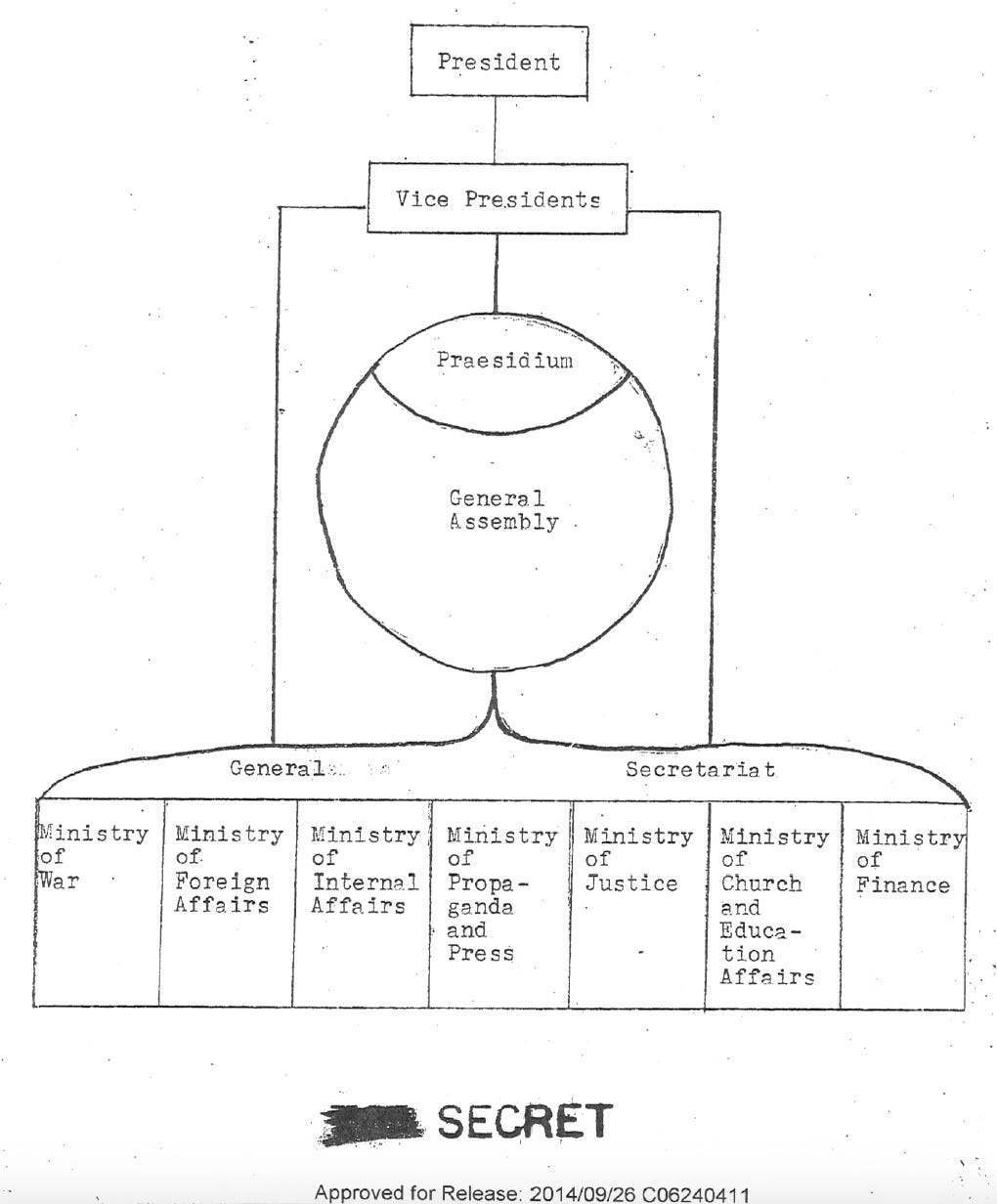
Reading the Icon report, one can see the CIA assessing the various Ukrainian nationalist formations, including their operations abroad and inside Ukraine, with an aim to figure out how best to covertly support and manipulate these new assets. The CIA concluded that U.S. aid and support for Ukrainian assets should keep in mind how such assets would be used in the case of war with the Soviet Union. It must be recalled that in the late 1940s and early 1950s, war with the USSR seemed to be nearly imminent.
Although the type of support for eastern emigrant groups envisaged under Project ICON is necessarily neither as extensive nor of the same type as would be offered these groups in the event of an armed conflict between the United States and the USSR, nevertheless, and particularly in the case of the Ukrainians, any support presently granted should be consistent with whatever political and military use we might intend to make of the Ukrainian emigration and of the partisan movement in the Ukraine under war time conditions. [page 16]
It is strange but true that at the same time the CIA was evaluating how best to coordinate with anti-Communist Ukrainian nationalists in Soviet Ukraine (and their representatives abroad), the CIA was also assisting the Pentagon in its top secret plans to use both nuclear weapons and biological weapons (BW) against the Soviet Union. The region of Soviet Ukraine was in fact a primary target.
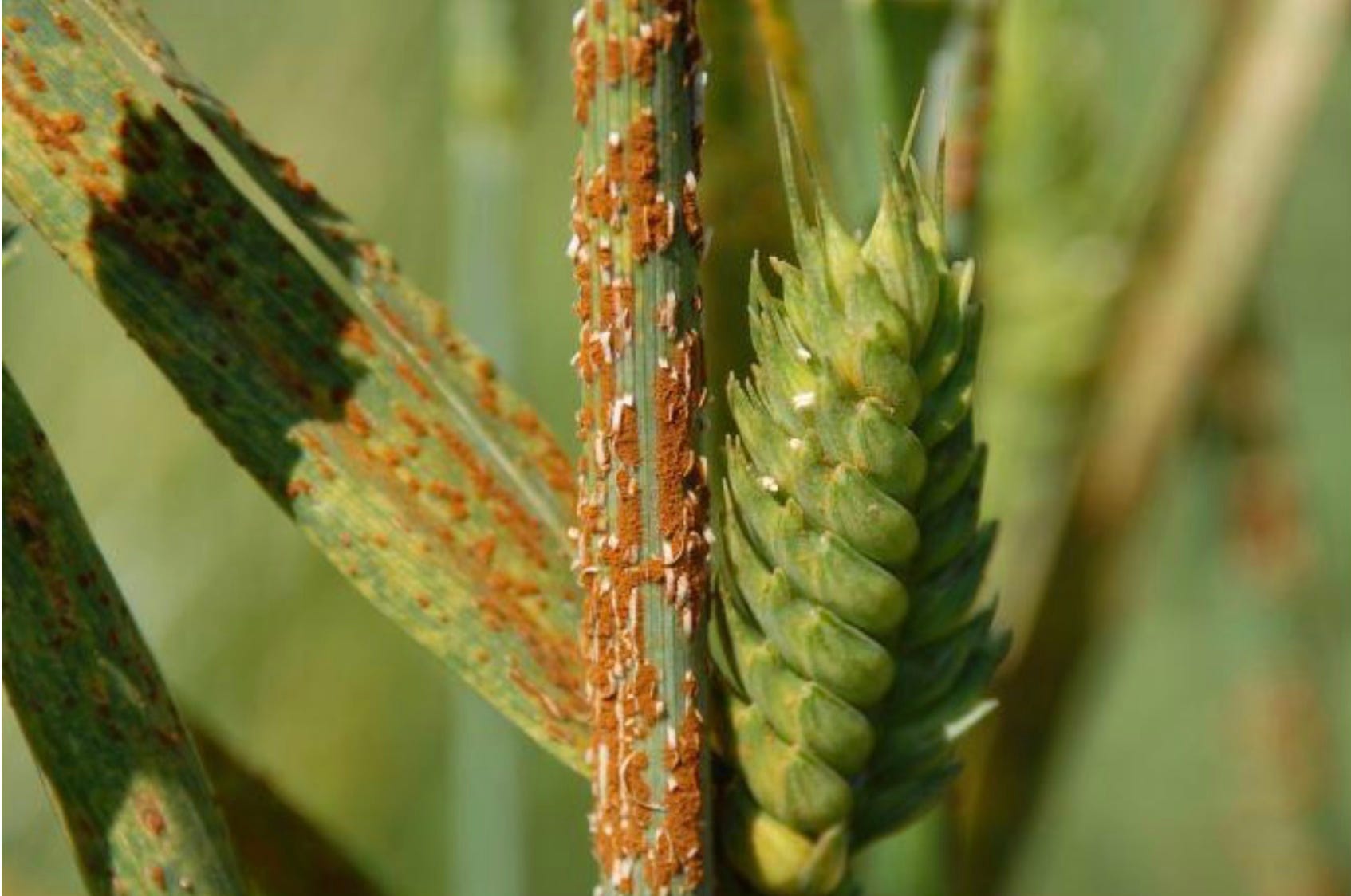
The U.S. military’s BW plans targeted nearly the entire country of Ukraine, as well as a large portion of Russia. A key component of those plans involved the use of various forms of plant rust, a fungal plant pathogen, to destroy the primary crops in those areas (wheat, barley, rye, oats) and induce large-scale starvation in the population, which would powerfully impact the Soviet Red Army. As the CIA well knew, crop failures in this region in the past had caused famines and killed millions of people.
Did the various Ukrainian nationalist leaders working with the United States at various times during the 1950s, when these schemes were at their height, know about the plans for the BW destruction of Ukraine’s food grain crops? It is extremely doubtful any of them knew anything about top secret U.S. BW plans (though they must have known their country was a nuclear target for the U.S.). They were, whether they knew it or not, pawns in the greater project to destroy the Soviet Union, and even more, all communist forces and their supporters on the planet.
If biological weapons, or in another possible scenario, nuclear weapons, or both, had devastated Ukraine’s cities and countryside, how would U.S. authorities have rationalized the concomitant destruction of the U.S.-backed anti-communist cause —and its activists — in Ukraine? I think, borrowing an analogy from the U.S. war in Vietnam, Ukraine’s U.S. intelligence sponsors might have thought, well, we had to destroy the country to save it! “Better dead than Red” was a slogan of many U.S. Cold Warriors.
Project Steelyard
It is a matter of historical fact, but little mentioned today,1 that in the 1950s and 1960s, the U.S. had military plans to create a famine in the Soviet Union, and particularly in the areas that today are considered southern Russia and Ukraine. Such a famine, which could have killed millions, was to be accomplished by use of anti-crop biological weapons.
This may seem a bizarre charge to make, but I shall document it all below.
I don’t believe anyone has ever pointed out that while U.S. intelligence organizations were backing right-wing Ukrainian nationalist politicians and organizations in a struggle against the Soviet Union,2 the U.S. military, with the assistance of the CIA, was planning to drop anti-crop biological weapons across portions of the Soviet Union, including a broad area of Ukraine and Southern Russia.3
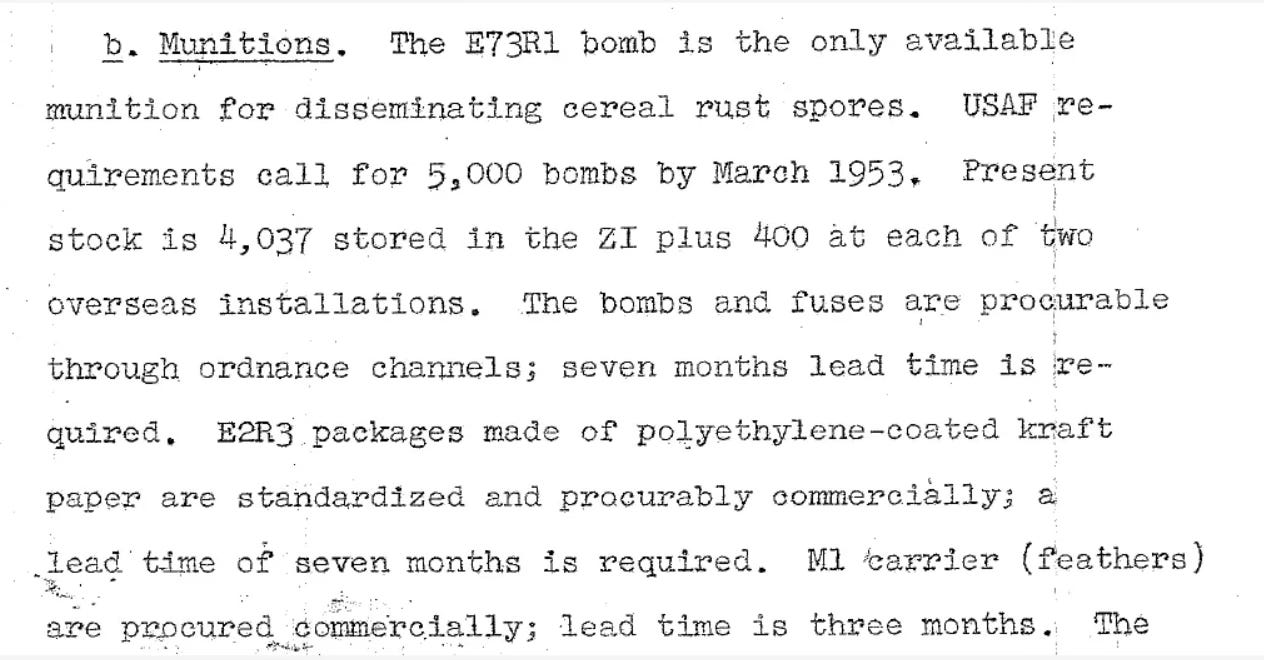
I have previously documented some of the activities of Project Steelyard, which included the forward positioning of hundreds of biological bombs at U.S. and UK airbases in England and Libya, with plans for other bombs to be available at bases in Morocco and Cairo, Egypt. I am not going to repeat the entire story of Steelyard here, and readers are encouraged to peruse that article for the full details of the U.S. biowarfare plans.
Anti-crop biological warfare is an often overlooked weapon of mass destruction. Its aim was diabolically revealed in the Nazi’s Hungerplan, “a scheme to systematically starve 30 million Ukrainians, Russians and Slavs. The resulting food ‘surpluses’” were then to “be redirected to the Nazi armed forces and German civilians.” While the Nazi plan to eliminate “30 million ‘surplus eaters’” in the Soviet Union ultimately failed, the initial stages aimed at Soviet prisoners of war killed over 3 million POWs, mostly by starvation.
Am I exaggerating U.S. intentions? Hardly. Consider this excerpt from a June 1962 report, Analysis of Strategic Anti-Crops Weapons Systems (alternate link), prepared by Dunlap and Associates for the U.S. Army Chemical Corps Biological Laboratories at Fort Detrick, Maryland, the center for research into U.S. biowarfare:
The advent of modern biological and chemical agents which can effectively attack and destroy a variety of crops now makes it possible to consider the delivery of such agents on a strategic scale to wipe out entire crops of a region or country, thus leaving the target nation in a state of famine and subsequent starvation. [report pg. 1, PDF pg. 13]
According to the report, the countries targeted for biological anti-crop attack included “Bulgaria, Yugoslavia, Hungary, Roumania [sic], Czechoslovakia, Poland, Iraq, Syria, Indonesia, Vietnam, Laos, Burma, Afghanistan, Thailand, Malaya, Sumatra, Borneo, Korea, Egypt, and Algeria, as well as China and the U.S.S.R.” report pg. 6, PDF pg. 18 ].
The Dunlap consultants to Ft. Detrick felt that the People’s Republic of China — circa 1962 — represented a country ripe for anti-crop biowarfare (BW) attack. The following screenshot provides their rationale:
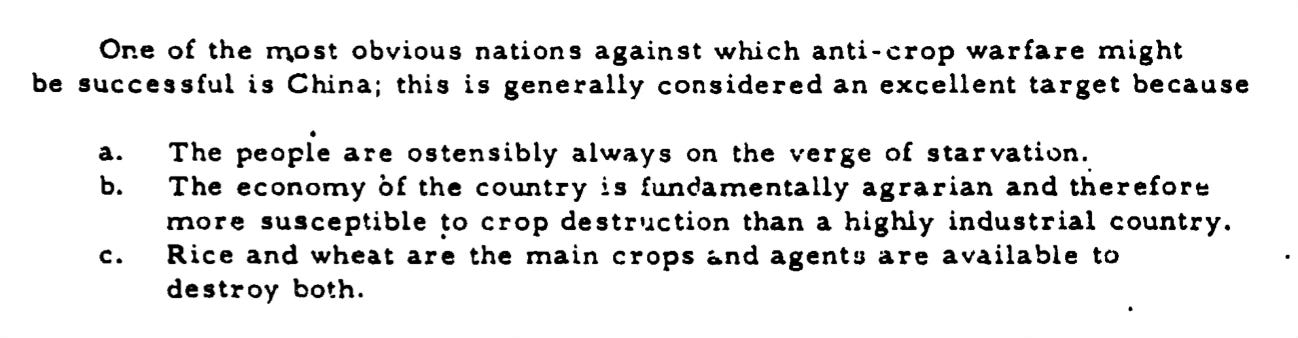
On the other hand, use of anti-crop BW against the Soviet Union was considered by the time of the report as “difficult in the extreme” due to the fact “any attack would be detected and interpreted as an act of war and we would thus run the risk of starting a major conflict.”
It must not have escaped the notice of the Pentagon’s hired consultants that the USSR had by 1962 a large nuclear retaliatory capacity. Because of the Soviet Union’s size and ability to import goods, the report noted, “Any large-scale destruction of her own crops, although doubtless capable of causing considerable concern to the Soviet regime, would in all likelihood not bring that people to their knees” (Report pg. 6,PDF pg. 18).
But the Pentagon’s reluctance to use BW on the Soviet Union was not as pronounced a decade earlier, during the period of Project Steelyard. In February 1952, the CIA’s Office of Research and Reports (ORR) and the Office of Scientific Intelligence (OSI) produced a “provisional intelligence report” on grain surplus areas in the USSR which could be selected as prime biological warfare targets.
A Statistical Approach to Biological Warfare
A February 18, 1953 CIA report, The Pattern of Land Use in Relation to Target Grains in the USSR and the Probable Spread of Stem Rust on Cereal Grains, identified the primary targets as an area “in the southern part of European USSR and in a narrow belt of Asiatic USSR extending eastward from the Ural Mountains to the Altai Mountains.” The targets consisted of areas with large amounts of surplus grain. The USSR depended upon such regions to feed its entire people, as well as provide important national income from the export of some grains.
The CIA divided the grain surplus areas into first, Region I, where the target grains were winter wheat and barley. This region included the Kiev and Odessa oblasts of Ukrainian Soviet Socialist Republic, as well as Crimea4 and Moldavian SSR. The area basically included “all of South Ukraine,” as well as other parts of West and North Ukraine, and the “North Caucasus Economic Region,” which comprised Krasnodar and Stavropol krays, Groznyy Oblast and Dagestan ASSR. (See pgs. 8-9 in “Patterns of Land Use,” linked above.)
Region II was where the target grain was spring wheat. Region III-A comprised areas where winter rye and oats were prominently grown. Region III-B encompassed wide areas of the north of the Soviet Union, mostly Russian, which were covered with “vast forests… marshes, pastures and wooded areas” and had a grain deficit. The CIA considered this region held “relatively poor targets (less than 28-percent chance) for successful feather bomb drops”(Patterns of Land Use, pg. 13, PDF pg. 19, parentheses in original). The Asiatic belt with a grain surplus was designated Region IV, and the target crops there were spring wheat and oats.
How did the CIA conceptualize a bioattack on these areas? They basically relied upon a statistical approach, based on the percentage of land cultivated with a certain crop, and the probability that a biological bomb filled with one or another type of plant rust, or infectious anti-plant organism would take hold and infect an area’s crop. They looked intensively into the particulars of these factors. Their dispassionate language obscured the impact of the discussion, which was how best to produce starvation in the Soviet Union.
Here’s an example of how they analyzed the subject straight from the CIA report:
In that part of the Ukraine which is included in Region I the statistical approach to the pattern of land use indicates that, for example, 58 percent of the total area of Nikolayev Oblast was seeded to the four cereal target grains…. The distribution of acreages in Nikolayev Oblast is fairly uniform. If it is assumed that the grain rust spores disseminated from a single E-73 feather-bomb drop have an initial spread of 10 square miles, it may be construed that some spores from a single feather-bomb drop in Nikolayev Oblast would have more than a 58-percent chance of hitting one or another of the four cereal target grains. [Patterns of Land Use, pg. 9, PDF pg. 15]
The territory of Nikolayev Oblast is today known by its Ukrainian name, Mykolaiv Oblast. Its primary city is Mykolaiv. It is the center of a very important wheat producing center. According to the Food and Agriculture Organization of the United Nations:
Most of Ukraine’s wheat originates in Kyiv and the Mykolaiv region. Ukraine’s main grain ports, also on the Black Sea, are in Odessa and Mykolaiv. In 2021, Ukraine represented 9 percent of the global market share of exports. Ukraine’s maize export share over the same period was even more significant, averaging 15 percent and conferring it the spot of the world’s fourth largest maize exporter. Kyiv, in the Mykolaiv region, along with the Chernihiv region, are Ukraine’s leading maize producing areas.
The goal of seeding Ukraine’s prime agricultural areas with anti-crop pathogens, in order to destroy their prime agricultural product, is genocidal in nature. There is no question about that. The Pentagon consultants at Dunlap and Associates, who were looking at anticrop warfare, were clear about that.
In their report, Analysis of Strategic Anti-Crops Weapons Systems, they wrote, “given … an effective attack has been delivered, how does one impress the enemy with the seriousness of his situation… to accept surrender or armistice or control: in short, how does one negotiate with an enemy country which is faced with starvation?” (pg. 7, PDF pg. 20).
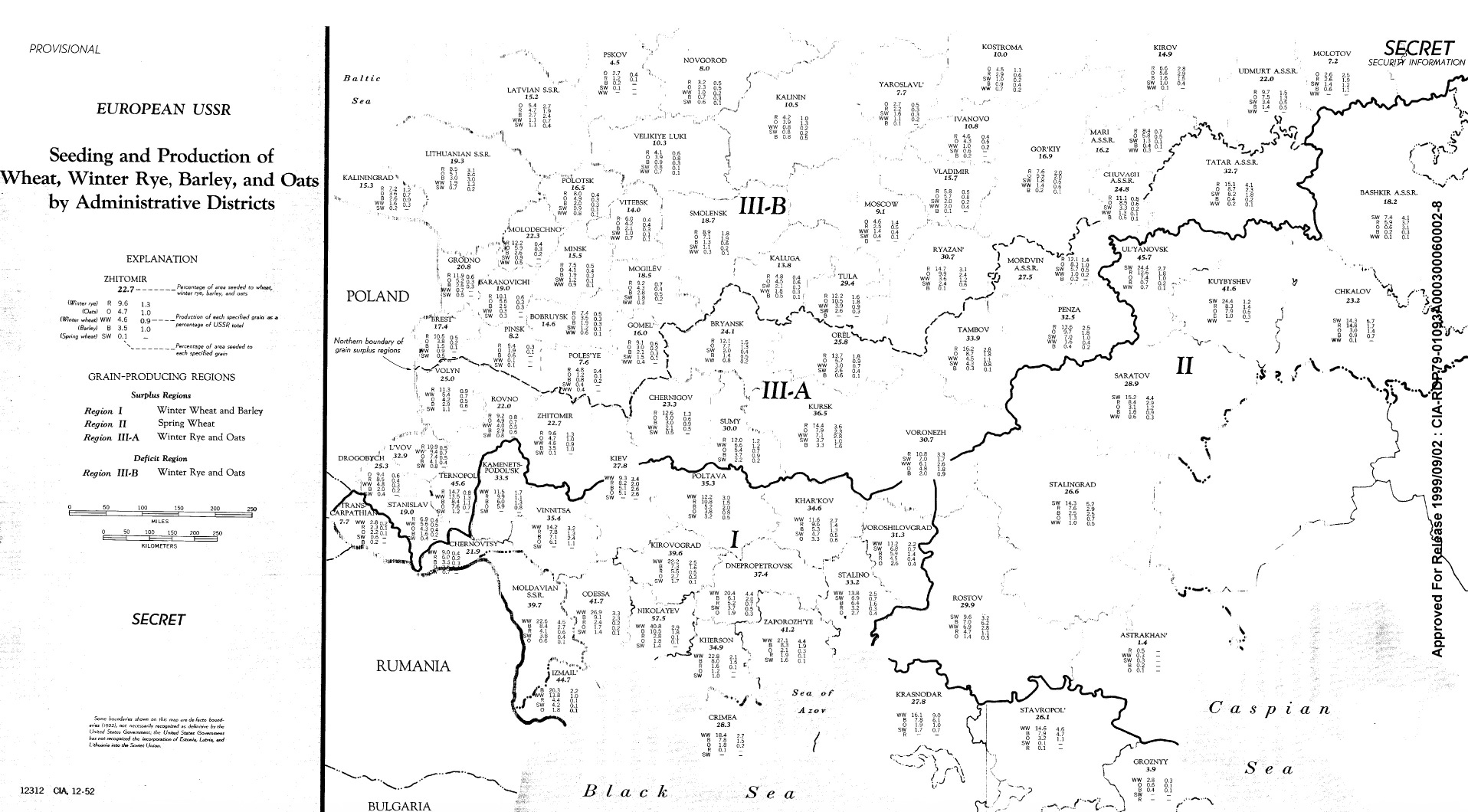
The UN’s Food and Agriculture Organization singled out the Kyiv, Mykolaiv [Nikolayev], and Odessa areas as central agricultural regions in Ukraine. How did the CIA analyze their importance back in 1953? I want to look at each of these regions in some detail. Each illustration below is taken from the same map pictured at the start of this article, and is taken from page 18 (PDF pg. 25) of the CIA report, The Pattern of Land Use in Relation to Target Grains in the USSR and the Probable Spread of Stem Rust on Cereal Grains. Each area discussed below belongs to Region I, as defined in that report.

What do all the figures mean here? The top figure, “27.8” refers to the percentage of the area in the Kiev oblast planted (or seeded) with wheat, winter rye, barley, and oats. (Oblasts are the primary administrative divisions of the country). So, we can see that a bit more than a quarter of the oblast is planted with these food grains.
Below that we have on the left hand side the abbreviations for winter wheat (WW); winter rye, hereafter just “rye” (R); barley (B); oats (O); and spring wheat (SW). The middle column of figures refers to the percentage of area in the oblast seeded with that grain. Hence, in Kiev, 9.3% of the entire oblast is planted with winter wheat. 8.2% of the oblast is planted with rye, 5.1% with barley, and another 5.1% with oats.
In the far right column the figures represent the percentage of these grains grown in that oblast as a percentage of the total amount of that grain grown in the USSR at that time (1953). No doubt these figures have changed somewhat in the intervening years, but probably not that much.
Hence, according to the CIA account, the Kiev region accounted for 3.4% of the entire winter wheat crop of the USSR, 2% of the Soviets’ rye crop, and 2.6% of both the barley and oat crops.

In the Mykolaiv-Nikolayev region, a whopping 57.5% of the oblast was planted with the primary grain crops. Of those crops, winter wheat represented a huge amount. Over 40% of the area in the oblast was seeded with winter wheat. Barley was a distant, though important secondary crops, with over 10% of the oblast planted in that grain. Rye and oats were a much lesser crop, as was spring wheat. The winter wheat crop planted in the oblast constituted nearly 3% of the entire wheat plantings in the entire Soviet Union.

Odessa oblast also was heavily agricultural, and winter wheat was its most important crop. (I’m going to assume that you can read these charts efficiently at this point, and without my help.) Just the three oblasts I have chosen here represented 9.6% of the entire winter wheat crop of the Soviet Union. In Russian SSR, the primary agricultural oblasts appeared to be that of Krasnodar and Stavropol, which grew 9% and 4.6% of the winter wheat crop of the Soviet Union, respectively.
Stem-rust and the 1932-33 Ukraine Famine
The figures for each singular oblast may seem minor upon first look. In order to assess the impact of crop loss in various regions of the USSR, the CIA looked at the 1932-33 famine that overwhelmed Ukraine and parts of southern Russia. This portion of the report should be of high interest to many readers. The CIA was most concerned, in this instance, with the role of “heavy [plant] rust damage” associated with the famine in the area from the North Caucasus to the region west of the Dniepr River, including West Ukraine.
A stem-rust epidemic in this period did indeed take place, and helped facilitate the famine. The CIA included the rust epidemic when discussing the Ukraine famine, along with other dynamic, interlocking factors such as the chaos caused by resistance to agricultural collectivization, apparent poor management in some of the new collectivized farms, an outbreak of mice in the area “destroying much grain in stacks and storage sheds,” the preexisting crop failure of 1931-32, excessive government demands for delivery of grains in some areas, and more, as causal factors for the famine.5
The bottom line, as the CIA saw it, was that extensive destruction of the Soviet grain crop was necessary for success of a BW attack with stem-rust infected feathers, their preferred mode of spreading the pathogen.
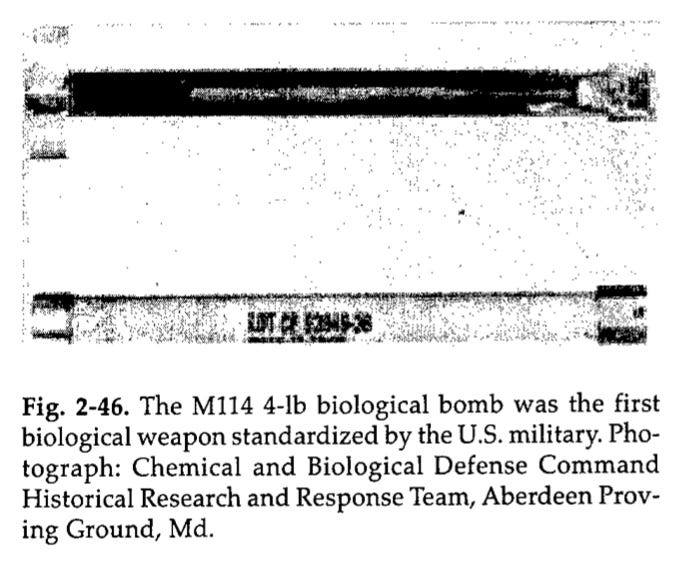
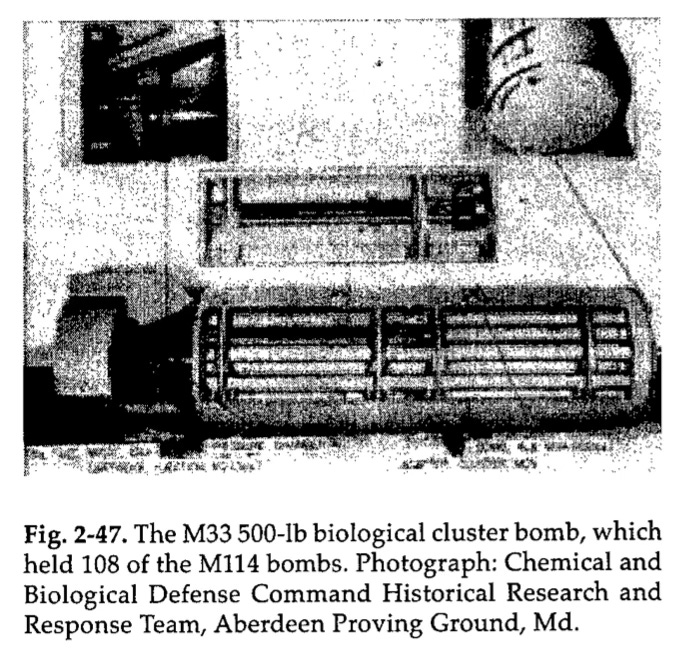
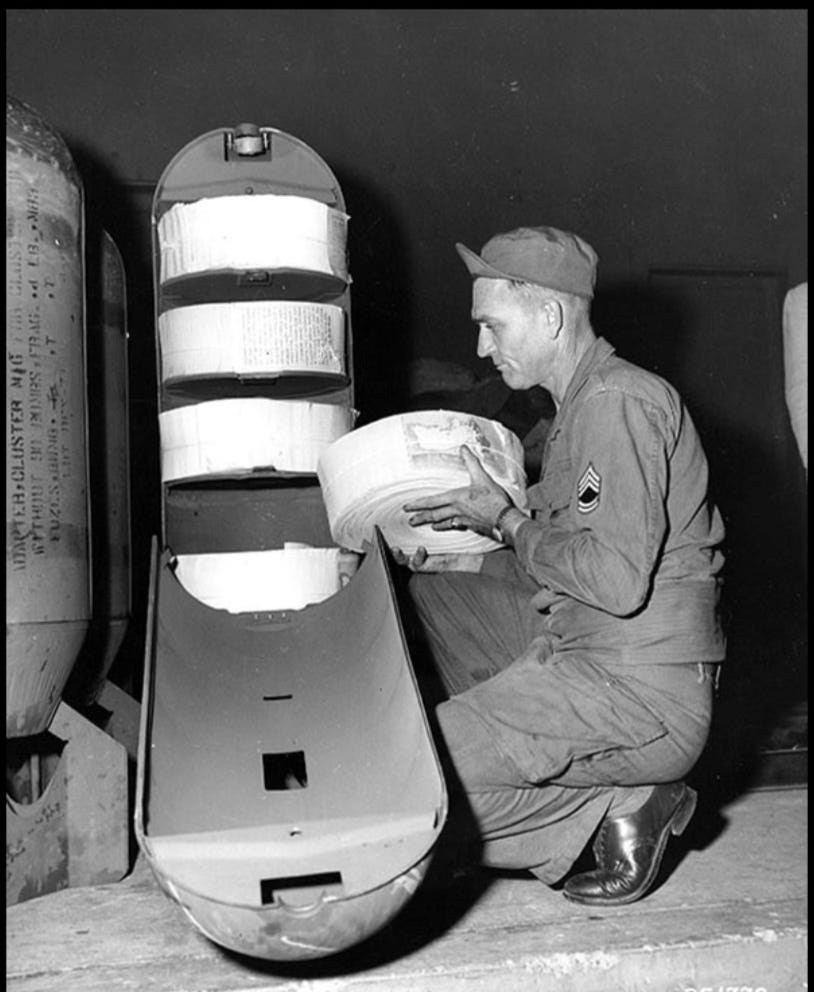
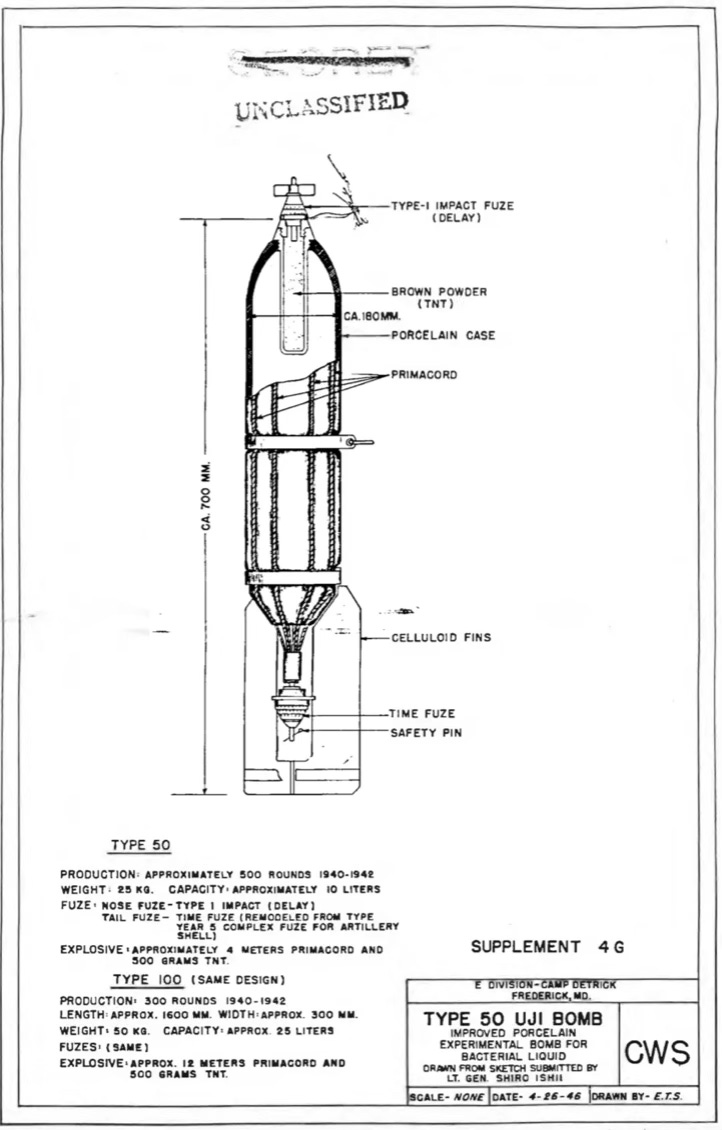
The mode of delivery was by use of a biological feather bomb, either by delivery via cluster bomb dropped from an aircraft or via a munition specially designed to be dropped by a high-altitude balloon. For a discussion about these methods of waging biological warfare, see my articles, Biological Balloon Bomb Was “High Priority” in U.S. Germ War Program, and Fu-Go Reconsidered: Japan’s WW2 Balloon Offensive, Unit 731, and the Manhattan Project.
Historian Simon Whitby tied the development of a feather disseminating bomb — what ultimately became the E77 anti-plant bomb — to Japan’s World War II BW program, particularly its Fu-Go or balloon program that sent thousands of balloons over North America in late 1944 and early 1945.
Work on the E77 anticrop balloon bomb was inspired by, and based upon, a Japanese design tied to the deployment of a free-floating unmanned balloon with a biological anticrop warfare payload…. Adopting the feather dissemination method devised for the E73 cluster munition, according to a US Operations Research Study Group report, the 80-pound E77 anti plant bomb was capable of carrying sufficient quantities of agent and carrier to “cause high levels of plant infection when impact [was] on target crops.” The weapon was designated as a strategic munition, with a group assigned for its deployment to the theater air command. [Whitby,6 pg. 218]
But the U.S. version of the Fu-Go bomb was never used, and the balloon bomb was supposedly “never deployed,” according to Whitby.
How to Make an Epidemic
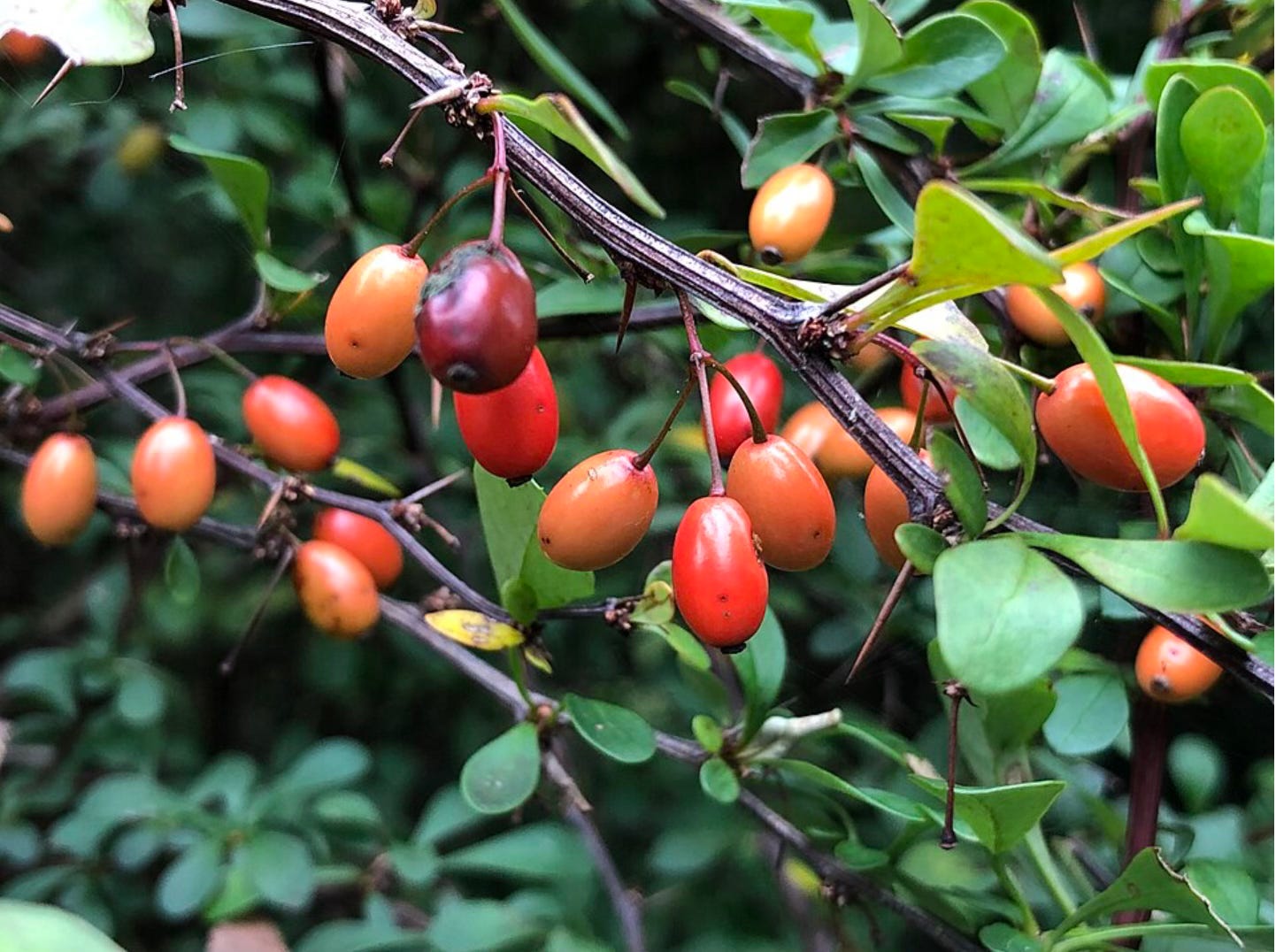
It is important to point out that spreading stem-rust is a more complicated task than one might suppose. The life cycle of the organism requires a stage where it lives in a host plant other than wheat or barley. That plant is the common barberry bush.7 The entire second part of the CIA report on “Land Use in the USSR” is a historical look at how the barberry bush facilitated stem-rust spread during known epidemics in the United States. The CIA extrapolated their examination of these naturalistic case studies to the problem of artificially inducing a stem-rust epidemic by means of biological weapons attack.
Determining what would make for a successful plant BW attack on Soviet grain crops, the CIA believed even a 20 percent destruction of overall Soviet food crops would not be a sufficiently powerful result. The CIA analysts concluded:
It must be borne in mind that the success of a BW attack on Soviet grain with feather-bomb drops will depend very largely on the extent of the stem-rust spread grids and the intensity of the destruction, within these grids, of the wheat, rye, barley, and oats growing in the three grain surplus regions of European USSR at the time of the attack. [Page 18]
The Ukraine experience of famine in 1932-33 helped solidify the CIA in its ultimate conclusion, which bore upon the entire BW anti-crop project as it related to the Soviet Union.
It is possible for a stem-rust epidemic to spread over parts of the southern grain surplus Regions I, II, and III-A of European USSR. (Ibid.)
The CIA’s report, The Pattern of Land Use in Relation to Target Grains in the USSR and the Probable Spread of Stem Rust on Cereal Grains, was not the only CIA report to touch upon the project of biological war against the Soviet Union. The report itself references an earlier study, dated June 10, 1952 and titled “A Preliminary Appraisal of the Effects of a Biological Attack on Grains in the USSR.” This latter report does not appear in any search result at the CIA’s FOIA Reading Room, nor anywhere online that I can see. If I ever wish to see it, I will have to FOIA it, and then wait.
These two reports do not complete an entire opus of the work CIA’s Office of Research and Reports undertook on the BW efforts aimed at the USSR. An August 12, 1952 memo, “ORR Research Program — Summary and Conclusions,” describes a number of other study projects for the Agency. These studies included a number addressed to Soviet economic vulnerabilities.
One project that referenced the effects of biological weapons attack was “Vulnerability of the Soviet and Satellite Food Supply to Biological Warfare.” A sampling of other ORR reports showed how carefully the CIA studied the effects of waging both “Cold” and “Hot” wars. The following two titles are examples of that: “Vulnerability of the Soviet and Satellite Economies, Including China’s, to Strategic Bombing with Particular Reference to Their Vulnerability to A-bomb Attack,” and “Vulnerability of the Soviet Bloc as a Whole to a Western Program of Economic Warfare. Relative Vulnerability to Various Measures — Overt and Covert.”
“Immense quantities of inoculum”
For the “Land Use” report, the CIA examined “some 1,528 case histories of stem-rust spread from infected barberry bushes.” The vast majority of these cases had little to offer by way of assistance to U.S. BW plans, as they represented “very limited spreads from small local foci of infection, obviously limiting their usefulness for the purpose of this survey.” Overall, the CIA found a “failure of significant spread in over 90 percent of the case histories” they reviewed regarding “stem-rust spread from barberry bushes.” (pg. 22)
But there were many cases still worth evaluating. Of the remaining 132 cases where a stem-rust outbreak spread over an area of more than one mile, 28 cases “were dramatic,” with crop infections ranging in area “from 50 up to 2,260 square miles,” with “heavy damage” in areas from 5 to 250 square miles (pg. 20).
The CIA also found that “Land-use pattern — that is, proportion of land in total farms, cropland, pasture, and woodland, where this last does not exceed 25 percent scattered through cropland — does not seem to limit the spread of stem rust” (p. 20.). This was good news, in that land-use patterns per se did not have to be overtly considered when planning a BW attack.
The CIA considered case no. 11 (in the report’s Appendix A) to most closely parallel a hypothetical overt BW attack. Case no. 11 was a 1946 stem-rust outbreak in Adams, Cumberland, and York Counties, in south-central Pennsylvania. This was an area of “moderately rolling terrain” with “a number of streams,” where 76 percent of the land was farmed. Grains made up one-third of this area. The barberry bushes grew close to the wheat fields, within a mile. The stem-rust epidemic spread “irregularly with a rough conformity to drainage patterns in all directions.”
Overall, “an area approximating 600 square miles was generally infected. In some 250 square miles the damage was heavy.” (pg. 30) The infections caused a 20-45 percent reduction in grain yields. With these kinds of results, extrapolating a BW attack over a large area would mean one could certainly cause a wished-for famine in “enemy” lands.
The CIA’s examination of the case studies showed that “heavy damage over an area of not less than 100 square miles can be expected from each succesfully established focus of infection resulting form BW attack with stem rust early in the growing season….” (pg. 19)
There were two necessary qualifiers. There must be a “susceptible variety of grain” for the pathogen used, and there must be “at least reasonably favorable ensuing weather conditions” (ibid.).
In summary, stem-rust sread from barberry bushes took place “under a wide variety of conditions as to terrain, geographical location, and season.... “ What was especially needed was to establish a “central source of inoculum” (pg. 22).
In the context of biological warfare, an “inoculum” is the dose or quantity of a biological agent, such as a bacteria or virus, delivered to a target population.
According to the CIA’s analysis, “Immense quantities of inoculum” were “required for major epidemic spread.” A U.S. biological warfare attack would need a hell of a lot of feathers and feather bombs! It was still necessary to determine the “number of drops necessary to give reasonable assurance of an adequate initial infection.” (pp 22-23) While land-use patterns were not for the most part determinative, “the pattern of munition drop must take into account the unsymmetrical nature of the hoped-for spread in relation to wind and topographical features” (e.g., open plain, rolling hills, valley, etc.) (pg. 23).
Conclusion
As I was finishing this article, I read in the news that in the next few weeks President Donald Trump is planning to meet with Russia’s President Vladimir Putin, prior to then meeting with Ukraine’s president, Volodymyr Zelenskyy. This latest round of diplomacy is supposedly aimed at finding a diplomatic solution to the awful Ukraine war. Who knows if this latest round of negotiations will amount to anything, as meanwhile Russia advances slowly but surely on the battlefield, and Ukraine tries to find ways to strike more deeply into Russia.
One wonders if any of the participants in these negotiations know very much about any of the history I have outlined above. I’d like to think that maybe at least Putin does, but I have my doubts. This history is never really brought up in Russian propaganda, even when they are discussing supposedly current U.S. biowarfare capabilities or intentions. As for Trump or Zelinskyy, they likely have no clue. That seems to amount to a dangerous lack of knowledge. The issue is not so much that there will be an outbreak of biological war, but the ways in which the U.S. has used Ukraine as a proxy in its primary war against Russia (and once the Soviet Union) has lessons that have gone unlearned because the facts of that history are so little known.
As for biological weapons, the U.S. ostensibly foreswore use of such weapons, and destroyed BW stockpiles between 1971 and 1973. (In recent years, there have been controversies about a possible ongoing BW program, including possible collaboration between the U.S. and Ukrainian governments. See my article, “The Destroyed Ukraine Bioagents: Dangerous or Benign?”) What happened to make the U.S. generally abandon its large-scale BW program, including its plans to destroy enemy crops?
A 2009 analysis published by the National Defense University Press recalled how in March 1968 “an open-air test of the nerve agent VX at Dugway Proving Ground had gone awry, causing the toxic cloud to drift off the test range and kill or injure more than 6,000 sheep in an adjacent grazing area” (pg. 1).
While VX nerve gas is not a biological weapon, the controversy, joining those around U.S. use of herbicides and defoliants in the Vietnam War, led to a Pentagon reevaluation of the use of Chemical, Biological and Radiological weapons in general. There had always been competition among different factions at the Pentagon regarding the usefulness of biological weapons, especially as the nuclear arsenal grew.
The 2009 report, “President Nixon’s Decision to Renounce the U.S. Offensive Biological Weapons Program” (by Jonathan B. Tucker and Erin R. Mahan) stated the issue: “With respect to BW, the main question was whether the U.S. BW stockpile added significantly to the Nation’s nuclear arsenal for deterring and retaliating against enemy BW attacks” (pg. 3). The answer appeared to doom the BW project.
In August 1969, “scientific experts” working on a National Security Council Review Group, “concluded that biological weapons had serious drawbacks from a military standpoint.”
Although lethal BW agents were more potent and cheaper to manufacture than lethal CW agents such as sarin and VX, biological pathogens were slower acting, less reliable in the field, and unpredictable in their effects, and had a shorter shelf life in storage. Because biological weapons caused acute symptoms only after an incubation period of several days, they had little utility on the battlefield and were best suited for attacks against population centers. Yet the effectiveness of BW for strategic deterrence and retaliation was limited because retaliatory use would entail lengthy delays to detect an enemy attack and deliver a counterattack to sicken the target population. Moreover, biological weapons would presumably be redundant in a nuclear exchange. [Page 4]
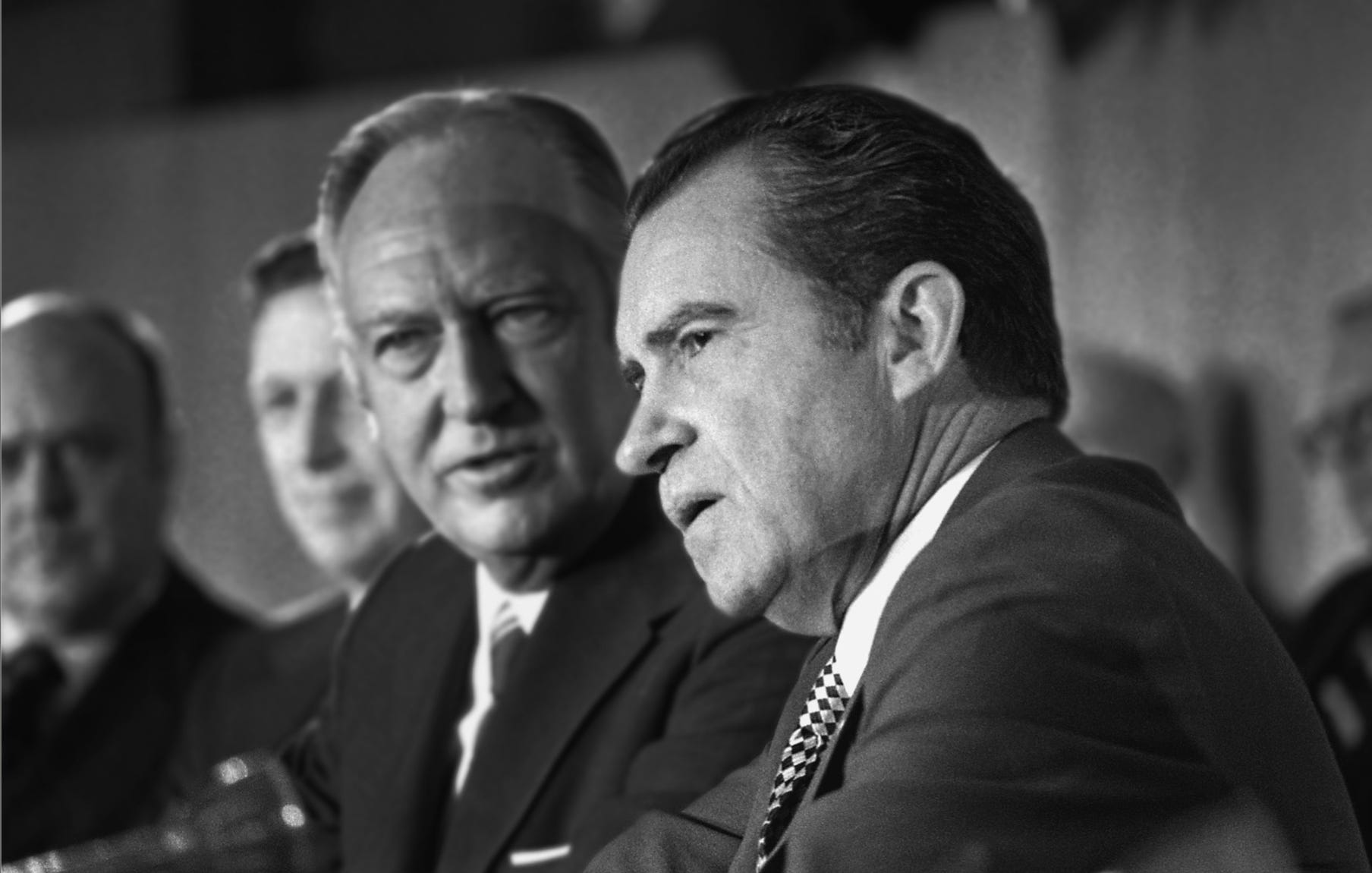
On November 25, 1969, President Richard Nixon announced the U.S. would abandon its BW program. Shortly afterwards, he clarified that also meant abandoning the use of toxins, such as botulism as a weapon. “Biological weapons have massive, unpredictable, and potentially uncontrollable consequences,” Nixon said. “They may produce global epidemics and impair the health of future generations” (page 10).
Very little in the 2009 National Defense University analysis was said about the U.S. BW program as it related to anticrop warfare. Nevertheless, at least formally, by 1973, the program to initiate a new Hungerplan seemed to have come to an end.


Note: The quote at the head of this article is from Leo Tolstoy’s Anna Karenina (Penguin Books, 2000, Richard Pevar and Larissa Volokhonsky, trans., pg. 757).
One important exception to the paucity of attention to the Steelyard story comes from Nicholson Baker’s 2020 book, Baseless: My Search for Secrets in the Ruins of the Freedom of Information Act. Not only does Baker discuss Project Steelyard, but also how the military’s anticrop BW plans continued into the 1960s:
The antiwheat research, paid for and planned and pushed by the CIA, and approved of, or at least tolerated by, four presidents, continued into the 1960s. In 1963, the Air Force flight-tested the A/B 45Y-4 anticrop “dry disseminator” for high-speed planes…. For six years, from 1960 to 1965, a team of Detrick employees intentionally infected several acres of wheat in Hays, Kansas (home of a wheat research and improvement station), with race 56 of stem rust. They charted the number of pustules per culm, studied the best times to introduce spores, and compared the yield of diseased wheat with a nearby control field that they’d sprayed with fungicide. Damage was severe almost every year, but especially in 1965: “Yield was reduced from 62 bushels per acre in the control area to 18 bushels per acre in the rusted area.” The scientists don’t seem disconcerted by the implications of their next sentence: “In this same year, 1965, a natural epidemic of stem rust severely damaged wheat in much of Kansas and Nebraska.” They stopped the experiment after that. [Baseless (pp. 267-268), Kindle Edition]
Baker’s book is where I first came across the reference to the 1952 CIA report, The Pattern of Land Use in Relation to Target Grains in the USSR and the Probable Spread of Stem Rust on Cereal Grains, which is discussed in detail in the present article.
See Chapter Five, “Collaborators: Allied Intelligence and the Organization of Ukrainian Nationalists,” in R. Breitman & N.J.W. Goda, Hitler’s Shadow: Nazi War Criminals, U.S. Intelligence, and the Cold War, National Archives, 2010.
Western historians have long downplayed the manifest actions of the U.S. offensive biological warfare program. One area they almost never cover are the plans to use anticrop biological weapons against the Soviets and their allies. An example is this 2004 article by Stefan Riedel at Baylor University Medical School. Riedel noted the development of BW weapons to cause famines, but buried the details. His description makes it sound like the anticrop weapons development came later than it did. “By the late 1960s, the US military had developed a biological arsenal that included numerous biological pathogens, toxins, and fungal plant pathogens that could be directed against crops to induce crop failure and famine,” Riedel wrote.
At the time of the CIA report, Crimea was part of the Russian Soviet Socialist Republic. On February 19, 1954, it was officially ceded to Ukrainian SSR by order of the Presidium of the Supreme Soviet of the Soviet Union.
I don't think there’s any question that a series of famines in the early 1930s killed millions of Ukrainians, Russians, and other nationalities in the USSR. On the question of whether Stalin or the Soviet regime intended a genocide (“Holodomor”), I tend to follow historians Robert Davies & Stephen Wheatcroft’s conclusions in their 2006 essay on the subject, “Stalin and the Soviet Famine of 1932-33: A Reply to Ellman.”
Of great relevance to the present article, in his 2001 essay, “Natural Disaster and Human Actions in the Soviet Famine of 1931-1933,” historian Mark B. Tauger highlighted the role of a grain rust epidemic in the crop failures that led to the Soviet famine of that period. “The most important infestation in 1932 came from several varieties of rust, a category of fungi that can infest grains and many other plants,” Tauger wrote (pg. 13). (Tauger’s earlier essay, “The 1932 Harvest and the Famine of 1933,” Slavic Review, September 1992, is also worth reading.)
My article here concerns the strategies and techniques the U.S. used to plan an attack on Soviet crops to create starvation in the Soviet Union. One can read the CIA’s own 1953 assessment of the 1932-33 Ukraine famine in the pages of the CIA’s “Land Use” report, pages 15-18.
Simon M. Whitby, “Anticrop Biological Weapons Programs,” in Deadly Cultures: Biological Weapons since 1945, M. Wheelis, L. Rózsa & M. Dando, eds., Harvard University Press, 2006, pp. 213-223.
A fact sheet put out by the Washington State University explains:
Historically, stem rust of wheat and barley has been one of the most important diseases human civilization has confronted….
Unlike most diseases, stem rust requires two plants to complete the entire cycle. The common barberry (Berberis vulgaris) is the alternate host to the stem rust fungus, and is crucial to the pathogen completing its life cycle.
See also this U.S. Department of Agriculture fact sheet, “Black Stem Rust and Barberry.”
Excellent article, thank you!
Especially appreciate the footnote link to the Davies and Wheatcroft essay on the "Holodomor."
One little thing: at the beginning, you refer to "anti-communist nationalists" in Ukraine. I think you meant Nazi collaborators, notably Stepan Bandera and Mikola Lebed, who were heavily supported by the CIA's Operation Bloodstone, as documented in Christopher Simpson's invaluable book, Blowback, "The first full account of America's recruitment of Nazis, and its disastrous effect on our domestic and foreign policy." It goes way beyond Operation Paperclip. The Ukrainian Nazis were so vicious, they made the German Nazis uncomfortable. Bandera is honored, today, with a Ukrainian national holiday, which started after the 2014 Maidan Coup.
An excellent and scholarly report on amerika's total preparedness to slaughter millions of innocents in the name of global hegemony.
I despair when I read such reports, because they really make no rational sense. What did the USSR do to deserve such treatment? Win the Great Patriotic War at huge personal cost & in doing so protect all of europe from fascism for 50 years?
I believe this to be the only credible explanation, USuk somehow understood that the miserable 11 divisions they defeated in western europe could not compare with the >170 nazi divisions (including italian, albanian, romanian, czech, and scandi nazis who made up several nazi divisions) which the USSR had blown away. That outcome had prevented USuk from 'cutting a deal' with nazis in Italy when USuk was stymied in Italy late 1943.
amerika and its puppets were not able to defeat USSR militarily, so they decided to continue what adolf had begun & slaughter all Soviet humans.