
Dismantling Asylum: An Attack Upon Humanity
Under both Democratic & GOP administrations, despite its international obligations the United States has seriously damaged the operations of its asylum apparatus.

“Everyone has the right to seek and to enjoy in other countries asylum from persecution.” — Article 14(1), Universal Declaration of Human Rights, December 1948
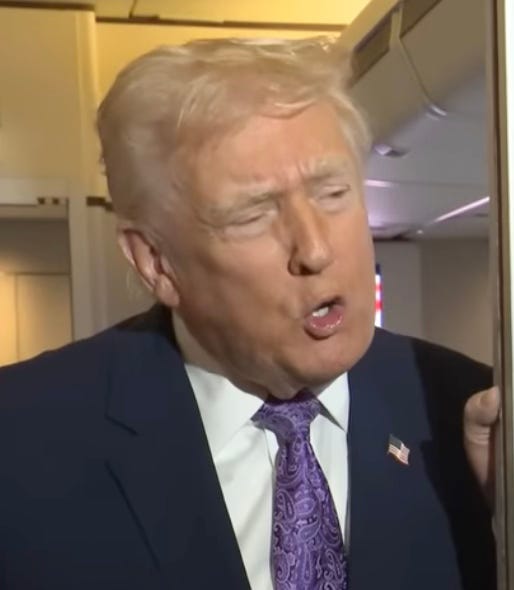
Reporter Libby Dee with News Nation: How long does your administration plan to pause asylum into the US?
President Trump: I think a long time.
Dee: Can you, can you give any kind of time? What’s a long time?
Trump: We don’t want those people. We have enough problems. We don’t want those people.
Dee: Is that a year or two years?
Trump: No time limit. But it could be a long time. We don’t want those people. Do you understand that?…. Let me just tell you something. We don’t want those people. Does that make sense? You know why we don’t want them? Because many of them are no good and they shouldn’t be in our country.
— White House YouTube account, November 30, 2025 (Begins at 6:05)
At the very beginning of the 21st century I began working part-time with a torture treatment center in San Francisco, California, which provided services to refugees seeking political asylum. As a psychologist, I provided both psychotherapy and psychological evaluations for attorneys working in the immigration courts for asylum applicants. This was low-fee, pro bono type of work.
The evaluations were conducted in order to substantiate the asylum seekers’ claims of persecution and the existence of a “well-grounded fear” of further torture and/or persecution if they were returned to their country of origin. I provided testimony regarding my findings, subsequent to a “voir dire” process that authenticated I was an “expert witness” in immigration court.
In the process of doing this work, I met men and women from many countries, and had the opportunity and privilege to hear their stories, usually in harrowing detail. As I recall, I worked with immigrant, asylum-seeking clients from (as a partial list) all of Central America, except Costa Rica, Eritrea, Ethiopia, Egypt, Jordan, Russia, Uzbekistan, Krygyzstan, China, Yemen, Syria, Iran, Myanmar, India, Iraq, Bosnia, the Philippines, Fiji, etc.
There were also clients who were essentially stateless, having grown up in various refugee camps in different parts of the world (e.g. Tibetan camps in India, Palestinian camps in Jordan).
Lest one thinks that the countries listed above were uniquely involved in political persecution and torture, from my experience there very few countries I know of that have totally eliminated torture either as a means of interrogation or social control, or both. That is true even as the majority of countries in the world are signatories to the United Nations’ Convention Against Torture (CAN) treaty.
As an aside, I want to point out that only a few years ago the UN agency that enforces the CAN treaty found that the United States was in violation of the UN torture ban. The U.S. had been in violation of the treaty since George W. Bush implemented his rendition to torture program, sending detainees to CIA black site prisons and to Guantanamo. Under the terms of the U.S. Army Field Manual for interrogation, the U.S. remained in violation of portions of the CAN treaty under the Obama, Biden and Trump administrations. I believe it remains so today in the second administration of Donald J. Trump. (You can read the full UN Committee Against Torture report here; it makes sobering reading.)
Meanwhile, political persecution is escalating in the West, where, for instance, those who protest against Israel’s acts of genocide in Gaza are themselves pursued, arrested and their protests suppressed. (See, for instance, this December 23, 2025 CNN story on the arrest of Swedish activist Greta Thunberg, who was accused of violating Britain’s Terrorism Act “for holding a sign that said ‘I support the Palestine Action prisoners. I oppose genocide.’”)
A Dire Situation
A number of people I saw in my work with the torture treatment center were referred for psychological evaluations by attorneys because their asylum clients had failed to fulfill a one-year deadline for applying for asylum. This deadline, an add-on to asylum law in the late 1990s, meant that a person had exactly one year from their last entry into the United States to file for asylum, or authorities would not process their application. In many cases, the applicant had not been informed of the one year timeline.
One year may sound like a long time to most people, but for many refugees fleeing government oppression, and/or dealing with the psychological consequences of torture, the idea of approaching government officials in the United States, or even being in contact with police or uniformed guard personnel, was overwhelming.
The depression, anxiety and trauma symptoms endured by those fleeing their countries often led to social withdrawal and practical immobility. Such severe psychological states did not necessarily abate in one year. My job was to assess whether the circumstances of their persecution or torture was consistent with a behavioral reluctance or inability to address the one-year deadline.
While news stories relate the legal and political aspects of the controversies over immigration and asylum, very rarely do we get to hear the voices of the asylum applicants themselves. Instead the media is dominated by the voices of government authorities and billionaire oligarchs, who demagogically accuse migrants and asylum seekers of destroying Western nations’ racial identities.
Towards the close of this article, I will attempt to give voice to some of the experiences my clients described to me.
The situation for asylum seekers around the world is dire. In Europe, there is an even stronger reaction against asylum applicants than there is in the U.S. Even though the U.S. has had a very imperfect system, it still allowed asylum for many people fleeing persecution for their political or religious beliefs, or their mere existence in one or another oppressed group, or from chaos and gang violence that their own country was unable or unwilling to ameliorate, from sexual slavery and trafficking, from gender violence, from political oppression for their union activism, from torture and death threats and home invasions and bombings.
Technically, of course, the U.S. still accepts asylum applications and awards asylum to migrants deemed to meet U.S. requirements. But the path to the grant of political asylum becomes harder and longer with each passing year. And now, for who knows how long, Donald Trump has slowed down asylum grants to a trickle.
Over the years millions have fled to the United States, which promised refuge when other states closed their borders to them. The irony that many of the countries applicants had fled from had governments that were allies of the United States, and even had police and military forces trained by U.S. Special Operations, the CIA, and/or USAID, was not lost on me.
“A sense of hopelessness”
When I began my work with asylum seekers, I could see the system was already near broken. A May 2001 story in Migration News, a mainstream outlet funded by the German Marshall Fund of the United States and the University of California-Berkeley Center for German and European Studies, highlighted the capriciousness of the system:
The Los Angeles Times on April 15, 2001 profiled an asylum application filed by Tialhei Zathang, a math teacher from Chin state in Myanmar, near the border with India. In an echo of an earlier series in the San Jose Mercury News, the story emphasized that a foreigner's chances of winning asylum depend greatly on which of the 219 immigration judges considers the application: 20 judges granted asylum in more than 30 percent of their cases, and 69 approved fewer than 10 percent of the asylum applications.1
A few years later, in 2008, Michele Benedetto wrote in the Brooklyn Law Review:
Legal scholars, appellate judges, practitioners, and even the former United States Attorney General have expressed growing concern regarding the status of the immigration court system. As Judge Richard Posner noted in 2005, the adjudication of cases by immigration judges has “fallen below the minimum standards of legal justice.” Later that year, the New York Times reported that federal appeals courts “repeatedly excoriated” immigration judges for a “pattern of biased and incoherent decisions” (pg 468-469)….
Increasing reports of biased or incompetent conduct on the immigration bench raise particular concerns about the ability of the immigration court system to properly adjudicate cases. But these pervasive ethical problems also present an unparalleled opportunity for reform. (pg. 523)
.jpg)
But that reform did not come. Instead things have gotten even worse, until now we are faced with the near collapse of the asylum system itself, under special attack by the Trump Administration.
Just a few weeks ago, on December 7, the San Jose Mercury News reported, “Under the Trump administration, the Bay Area’s two immigration courts are rejecting asylum claims at double the rate as under the previous administration, as federal officials fire immigration judges, push to clear case backlogs and vow deeper vetting of asylum seekers.”
As an example, denial of asylum cases in the San Francisco and Concord, California immigration courts have more than doubled since the demise of the Biden Administration.
Mercury News reporter Ethan Varian explained:
Immigration experts attribute the sharp rise to new restrictions on asylum eligibility imposed by the Trump administration as part of its sweeping immigration crackdown. They also cite administration pressure on courts to process more asylum cases to reduce a massive backlog, even as federal officials summarily fired dozens of immigration judges nationwide.
The changes have created “a sense of hopelessness” among applicants, said Milli Atkinson, director of the Immigrant Legal Defense Program at the San Francisco Bar Association. “But more than that, there’s a sense of fear.”
Today, after attacks by the Obama, Biden and Trump administrations, applicants still wait years for their cases to be settled. Trump’s attack on the machinery of political asylum did not appear out of nowhere. The acts of earlier administrations are documented.
In every case, the Obama administration has argued that it can deport asylum-seekers without any oversight or review from the federal courts. This practice deprives asylum-seekers of their constitutional right to challenge their deportation orders in federal court. — ACLU Staff Attorney Terry Ding, June 2015
“The Biden administration continues to prioritize optics and political expediency at the expense of thousands of people who are attempting to exercise their legal right to seek asylum.” — Avril Benoît, MSF (Doctors Without Borders) USA Chief Executive Officer, June 2024
Nevertheless, the political battles over the right to political asylum have not all been lost. As an October 23, 2024 press release by The Center for Constitutional Rights (CCR) explained, a federal appeals court recently ruled in favor of the right of asylum seekers to come to the U.S. border and ask authorities for political asylum. A so-called “metering” program had been initiated during the Democratic Party administration of Barack Obama. This “metering” was meant to curtail what was claimed to be a crush of asylum applicants at the U.S. border. The policy was challenged by “Al Otro Lado, a nonprofit legal services organization assisting migrants on both sides of the U.S.-Mexico border, and numerous individual asylum seekers harmed by the policy.”
CCR described the rare victory:
Today, the Ninth Circuit Court of Appeals largely affirmed a lower court decision that held unlawful the government’s systematic turnbacks — or “metering” — of people seeking asylum at ports of entry along the U.S.-Mexico border. Since at least 2016, the government has prevented individuals at the border from accessing the U.S. asylum process through metering, as well as intimidation, coercion, physical abuse, and other tactics. Vulnerable families, children, and adults have been pushed back and left stranded in precarious conditions in Mexico, where migrants routinely fall prey to violence and exploitation.

The Mathematics of Asylum
There are definite benefits to being provided asylum. First and foremost is the sense of safety it provides to those who receive it. But there are material benefits, too.
According to U.S. Citizenship and Immigration Services (USCIS), when a person is granted asylum they are legally allowed to work in the United States. They can “immediately apply for an unrestricted Social Security card.” They can “request derivative asylum status” for their spouses and children. After a year, they can apply for permanent U.S. residency (a Green Card).
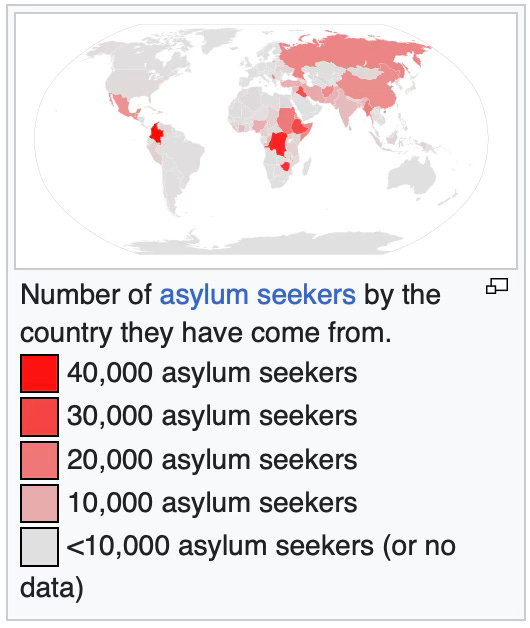
How many are actually granted asylum? According to the KFF website, in 2023, 54,350 people were granted political asylum. The site had other statistics worth noting:
About a quarter (26%) of those receiving affirmative asylum were children ages 17 years and younger while the remaining nearly three in four were adults ages 18 and older, who were primarily under age 35. Over four in ten (44%) were female while 55% were male.1 The leading countries of nationality for asylees included Afghanistan (27%), China (9%), Venezuela (7%), El Salvador (6%), India (5%), and Guatemala (5%). However, these data are incomplete because, as of October 2024, over 90% of asylum cases filed in FY 2023 were still pending with only 2% being granted approval due to immigration backlogs. [Footnote and link in original]
What about the hundreds of thousands, even millions now, who are waiting for their cases to be decided? Those still waiting for adjudication of their asylum cases are not necessarily granted the right to work in the U.S. While the majority of such asylum seekers have usually, until recently, been granted temporary right to work permits, according to a December 4, 2025 article in The New York Times, “As of June, about 434,000 asylum seekers and about 24,000 people granted asylum [still] had pending applications for work permits, according to the latest government data.”
Without the ability to get work, and without government benefits, how do these hundreds of thousands of individuals survive? Many live the most miserable of marginal lives, residing in church basements, relatives’ garages, or homeless shelters, existing on handouts and food bank distributions.
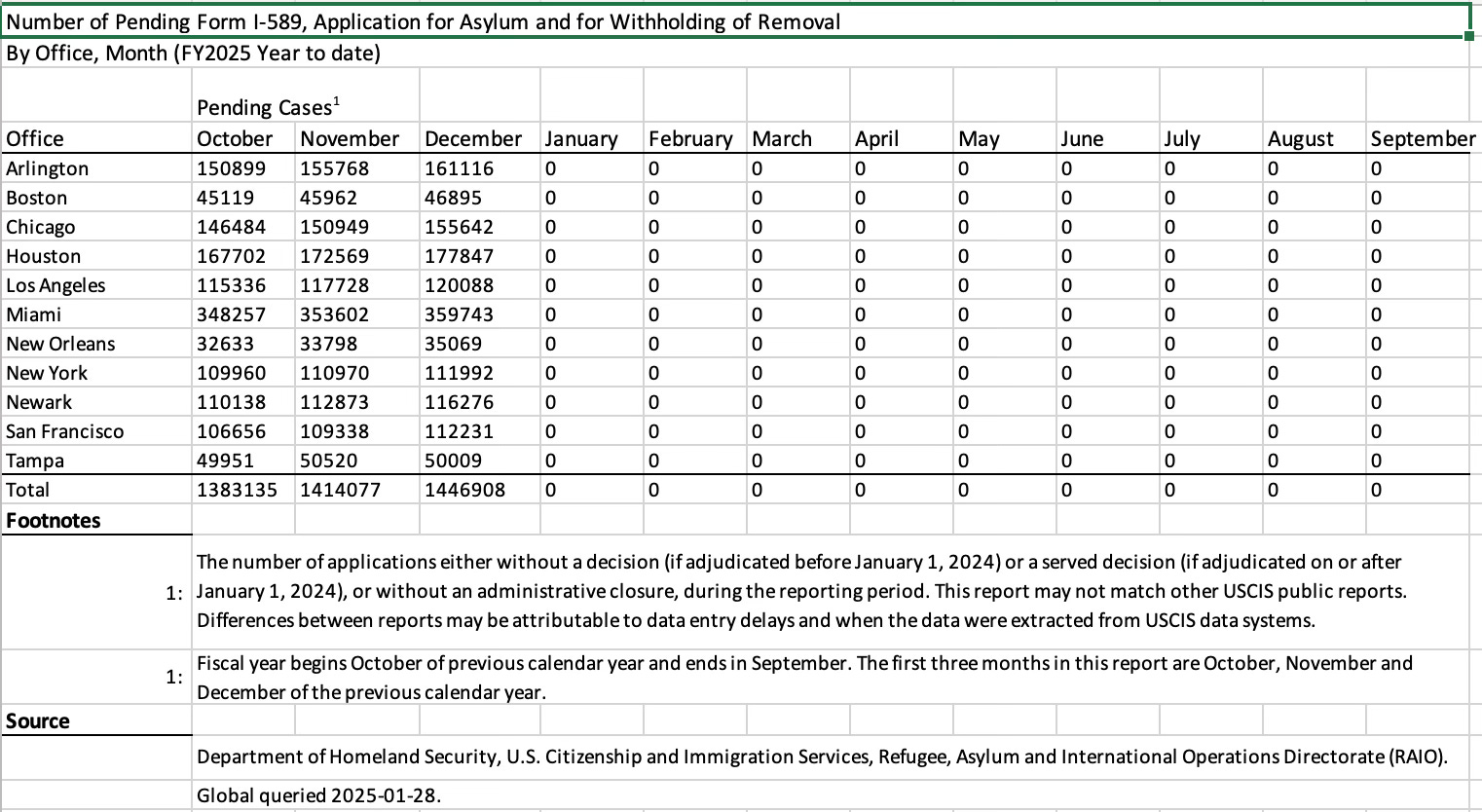
As recently December 31, 2024, “there were 1,446,908 affirmative asylum applications pending with USCIS [U.S. Citizenship and Immigration Services],” according to the American Immigration Council (AIC) (see table below).
The incoming Trump administration made this intolerable situation even worse, as it fired immigration judges and in general attacked the entire asylum system, culminating in Trump’s recent “pause” of all asylum decision-making, demagogically connecting his decision to the tragic shootings of two National Guard soldiers in Washington D.C.
After eight months of the Trump Administration, the situation for asylum seekers has become increasingly untenable. According to the TracImmigration website, as of “the end of August 2025, out of the total backlog of 3,432,519 cases in Immigration Court, 2,271,857 immigrants have already filed formal asylum applications and are now waiting for asylum hearings or decisions in Immigration Court.”
I don't know what the statistics were in the early part of this century when I was working with asylum applicants, but I knew many people who were waiting years for a final determination to their case. In some cases, it was due to government delays, or issues with an applicant’s attorney, or to the lengthy appeals process for an unfavorable decision.
I will always remember one case, a man who had been waiting for a hearing before an immigration judge for two years. One day I went to the courtroom (in San Francisco) where I was to testify and be cross-examined by a government attorney about a psychological report I had written substantiating the claims of torture and abuse suffered by this man in his home country.
Unfortunately, that day the government attorney was sick and could not appear in court. The judge, citing a very full docket, rescheduled his hearing for another two years in the future! In the meantime, this man had no right to work in the U.S., very little resources, and lived by the charity of some friends from his old country. I don’t know what subsequently happened to him, as I was never again called to testify in his case.
The point is that this was not an extraordinary occurrence, but a common feature of the asylum system. Nor were government attorneys always those at fault. I also recall how one time a client’s immigration attorney simply did not show up for his client’s court date. Once again, the asylum applicant’s day in court was shifted months out into the future by an immigration judge who, because there were nowhere near enough judges hired by USCIS, was swamped with pending asylum cases.
Nor are there enough immigration attorneys, for that matter. The Trump Administration appears to be deliberately manipulating the attorney shortages. According to a December 18, 2025 story for Hawaii Public Radio (HPR), immigrants seized in immigration raids are being shipped off the U.S. mainland to Hawaii from as far away as Florida. Hawaii has nowhere near enough immigration lawyers to handle the sudden influx.
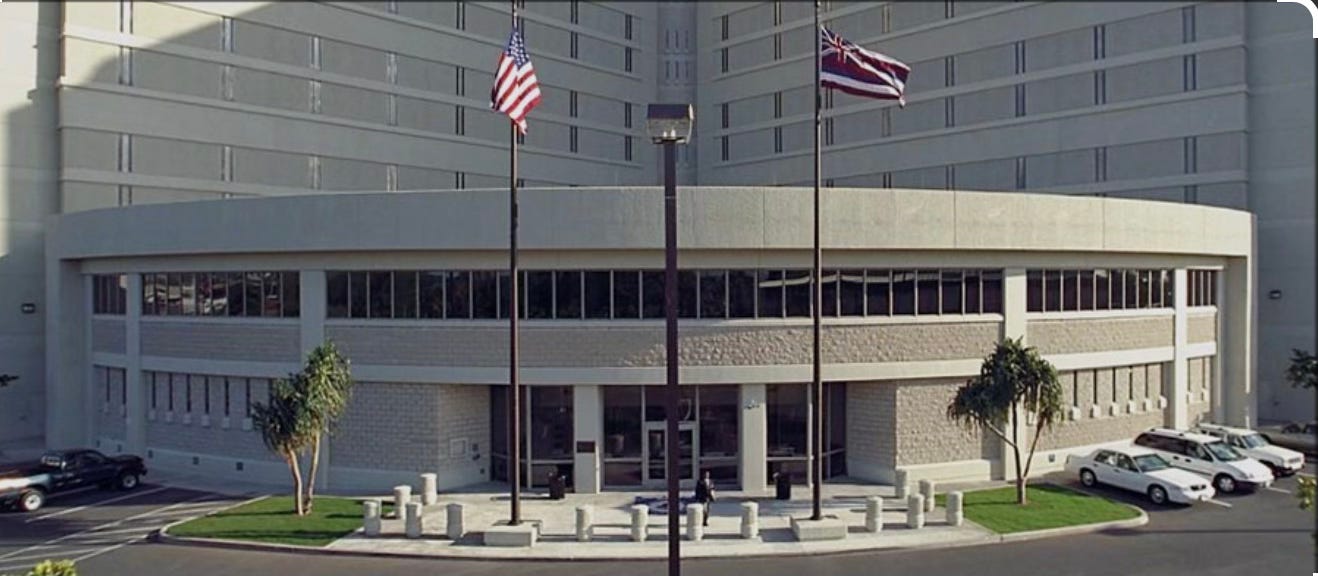
HPR described the situation:
ICE has been transferring detained immigrants from the continental U.S. to the Honolulu Federal Detention Center since this summer. Local immigration attorneys are facing unprecedented case loads and told HPR they are concerned that people may be falling through the cracks without adequate legal representation.
ACLU Hawaiʻi Immigration Rights Attorney Leilani Stacy has been working with other immigration attorneys, clients and community groups on the ground to try to understand why people are being transferred from the continental U.S. to the Honolulu Federal Detention Center….
“It’s not exactly clear to us or to anyone, really, as to the rhyme or reason why someone from California or Florida would be transferred here, particularly when they have no connection here.”
Can this situation be any less clear? The Trump Administration and ICE are sending immigration detainees to Hawaii precisely to increase the number of immigrants and asylum applicants who fall “between the cracks.” Such transfers also cruelly increase the amount of physical separation between detainees and their family or other supporters.
According to the American Immigration Council, today it can take on average over 3-1/2 years for a decision to be made on an asylum applicant’s case.
Individuals with an immigration court case who were ultimately granted relief, such as asylum, in fiscal year 2024 waited more than 1,283 days on average for that outcome. The Omaha Immigration Court in Nebraska had the longest wait times, averaging 2,119 days until relief was granted — That’s nearly six years!
The wait can be excruciating. According to the Trac-Immigration website:
People seeking asylum, and any family members waiting to join them, are left in limbo while their cases are pending.
It’s an onerous and impersonal system, and it’s difficult to believe that anyone would voluntarily put themselves into such a position if they were not in fact desperate!
I used to be asked in court about whether I had ever seen a case of fraud in relation to an asylum case. Indeed I had, though only in one case. This man confabulated an episode of torture, although I believed even then that he did so out of desperation, as the nature of his politics and the track record of the country he came from likely gave him good reason to fear persecution or torture should he be returned.
If my own personal statistics are representative, asylum “fraud” constitutes maybe 1 percent of asylum cases, probably even less.2 To shut down an entire system based on such a small percentage is not only absurd, it is a criminal abandonment of a population that is among the most vulnerable in the world. It is also an abrogation of treaty obligations and U.S. law.
Working with this amazing, though tremendously stressed group of people, I was impressed by the personal strength asylum applicants had to persevere and win their cases and live their lives.
But my impressions are biased by the nature of the sample of individuals with whom I came in contact. What about those who did not or could not persevere? Many and uncounted were the individuals who succumbed to depression and post-traumatic stress, who died by their own hand; or who never found their way to have an attorney represent them in court; or those sent to lock-up in federal or local and county prisons around the country; or who were denied entry upon initial evaluation by U.S. Customs and Border Protection and sent back to Mexico or to their own countries, sometimes to disappear altogether.
It was like a huge sea of human suffering, whose massive waves tossed upon the hard rock of U.S. immigration and asylum policy. Millions had fled economic, social and political persecution and hardships in their homelands. The lucky ones found their way to the U.S., and into the capricious and often onerous machinations of the asylum system. The very lucky were granted asylum upon initial interview. The others? Too many fell back into a gray ocean of bleak anonymity and hopelessness.
Statements of Asylum Applicants
I wish I could repost the reports I wrote that described in excruciating detail the persecution and abuse asylum applicants endured, either in their own countries, or in third countries through which they passed in an effort to escape their tormenters. But it is necessary to protect (even years later) their confidentiality.
I believe, however, I can provide a few snippets of what they told me, unconnected to any identifying details.
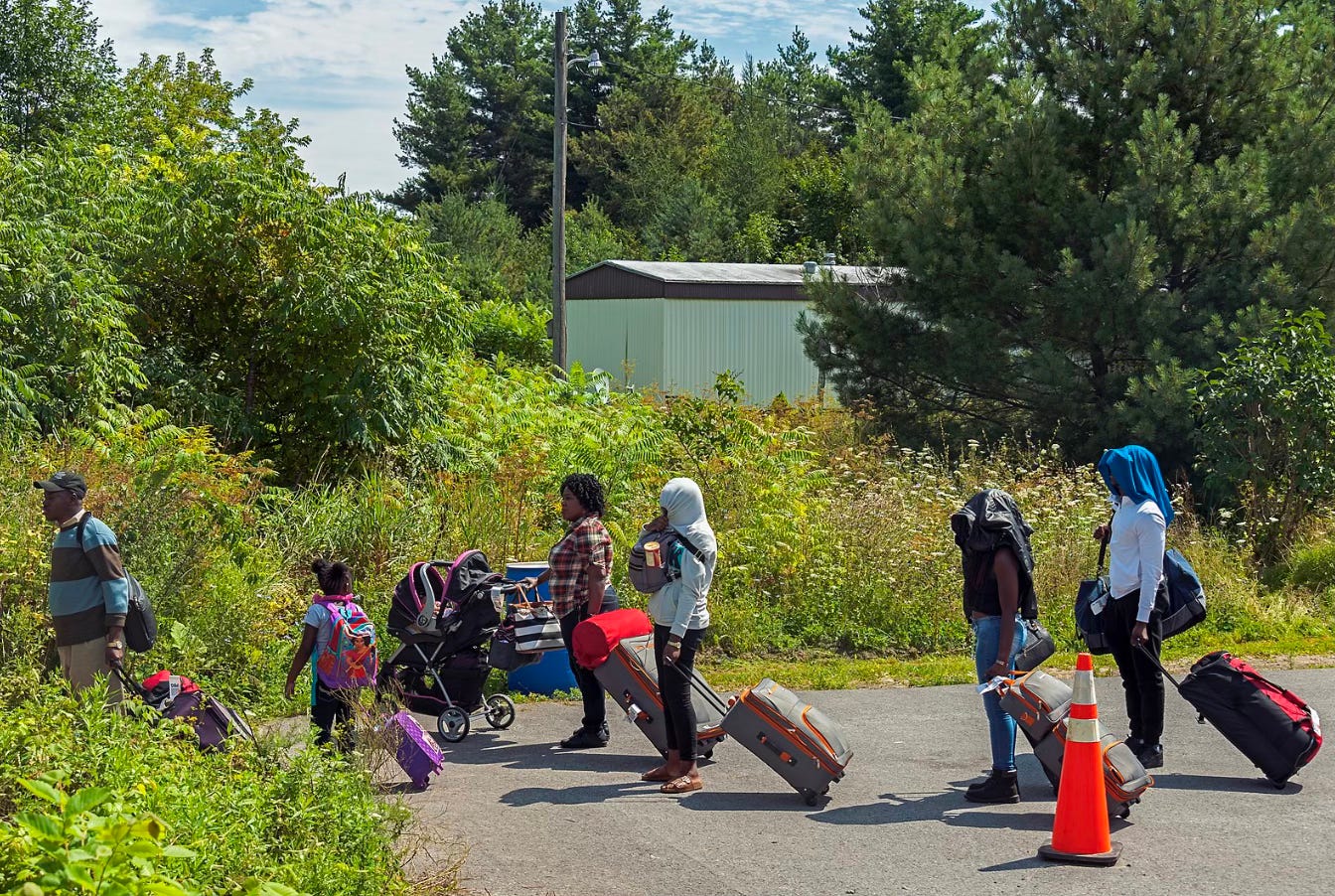

Talking about his government persecutors, one man told me, “I have seen what they could do to people. I am scared of them. They will kill you, or put you in prison where no one will ever hear you again. I know of people who were told everything is okay, but when they returned they disappeared.”
One woman was haunted in her dreams by the violence she both witnessed and endured .“In my dream, I am in prison. I see prisoners, see myself in my cell. I see soldiers wandering around me. I see prison guards shooting at me, until I wake up. I thought they’d hurt me, beat me. I shout, scream a lot. I don’t want to remember, but it comes back to me all the time.”
Another woman described the total control the police authorities had over her. “The police controlled the town. They told me, ‘We could disappear you.’”
I recall a young man who had travelled thousands of miles to escape government authorities. “I was helpless. I couldn’t do anything to prevent it [the authorities’ attack on his family members]. This was only one day but my life is going crazy from this. I felt worthless and guilty because these things are happening.”
An elderly woman who had been bouncing around the asylum system for years, who lived at the fringes of society, recalled an incident from her adolescence that she had never related to anyone. She had fled a massacre of demonstrators during a street demonstration in her home country. “I saw dead bodies loaded on trucks. I decided then I would never grow up, never become an adult…. Adults killed people.”
I never believed these people were “no good,” or exploiters of U.S. largesse. They were all, like the bulk of the other asylum applicants I worked with, desperate people, people who had no other place on this planet other than where circumstances and their own will to survive had carried them.
Their stories are part of our history, perhaps the most hidden history of them all, of the oppressed and their unrecognized struggle against all odds to obtain safety and the rudiments of hope.
For those who wish to help asylum seekers, there are a number of organizations that offer such assistance. Most of them may be very good, some maybe not. I’m going to recommend two of which I have personal experience.
East Bay Sanctuary Covenant was “founded in 1982 in response to civil wars in Central America.” It “was an early participant in the Sanctuary Movement in the U.S.” and is now “one of the largest affirmative-asylum programs in the U.S.” They accept donations, which are tax-deductible.
Center for Constitutional Rights “works with communities under threat to fight for justice and liberation through litigation, advocacy, and strategic communications.” They have been very much involved in litigating the rights of asylum seekers. Donations to CCR are also tax-deductible.
Donations to either or both organizations will be money very well-spent!
“O ye that love mankind! Ye that dare oppose, not only the tyranny, but the tyrant, stand forth! Every spot of the old world is overrun with oppression. Freedom hath been hunted round the globe. Asia, and Africa, have long expelled her.—Europe regards her like a stranger, and England hath given her warning to depart. O! receive the fugitive, and prepare in time an asylum for mankind.” — Thomas Paine, Common Sense, 1776
As a matter of corroboration, according to The New York Times, a 2006 report by the “Transactional Records Access Clearinghouse, a research group connected to Syracuse University… found wide disparities in the rate at which judges grant asylum to people seeking haven in the United States.”
Ten percent of the nation's immigration judges denied asylum cases in 86 percent or more of their decisions, while another 10 percent of judges denied asylum cases in 34 percent of their rulings during that same time period, the study found….
The study found wide variations in how different nationalities were treated. It reported that more than 80 percent of asylum seekers from Haiti and El Salvador were denied asylum for the period beginning in 2000, while fewer than 30 percent of asylum seekers from Afghanistan or Myanmar, formerly Burma, were denied.
According to an October 2021 fact sheet on asylum fraud put out by the National Immigration Form, “While concrete data is limited, the data we do have indicates that terminations of asylum status due to fraud is extremely uncommon.”
… according to a 2015 Government Accountability Office (GAO) report, as overall asylum applications first began to rise during the early 2010s, USCIS terminations of asylum status due to discovered fraud decreased, falling from 103 in 2010 to 34 in 2014. USCIS granted 76,122 individuals asylum during the same time period. The report also found that EOIR [Executive Office for Immigration Review] opened just seven investigations into asylum fraud in 2014, a year when EOIR immigration judges granted asylum to 8,775 individuals.
Claims that asylum fraud is on the rise are unsubstantiated by available data…. [links in original]
Thanks for this powerful article, Jeff. Sadly, it's a situation we in the UK were already familiar with before Trump's second term began, having had to endure a Conservative government that had attempted to make it a crime to seek asylum in the UK. Such moves are, as you note, in contravention of the obligations towards refugees that our countries created in the wake of WWII, but more significantly they create a creeping normalization of racism and anti-immigrant sentiment that eats away at the kind of everyday decency that is so fundamental to any notion of a balanced society. Trump and Stephen Miller are taking the US to a very dark place.
If the US wasn't party or even initiator of so many wars no one would need asylum. the entire premise is wrong, just stop the wars. Its not "moral" to try to help the people you just bombed or starved, it is cynical. Personally i think no one is going to be better off in the US anyway going forward, in the future (and already) it will be Americans seeking asylum imo.