
Major Update: Declassified Code Names for Biological Weapons Agents
Anthrax was agent "N." Bubonic plague was agent "LE." Smallpox was "ZL." Here's an updated list of all the declassified secret code names used in the U.S. germ warfare program that I was able to find.

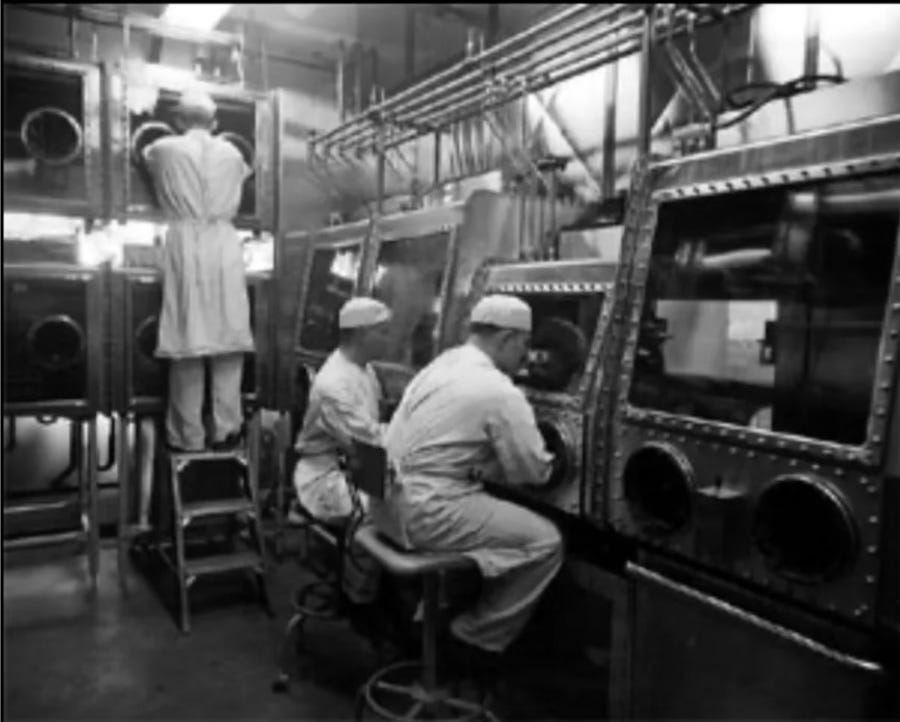
As described below, the list of declassified biological warfare (BW) agents in this update roughly doubles the amount of BW agents as compared with the initial publication of this article. The amount of new material is so large that I felt it merited republication. If you have saved or bookmarked the original version of this article, you may wish to replace it with this post.
The amount of pathogens studied as possible biological weapons, such as we understand it today, is daunting to contemplate. The U.S. Army did not stint in investigating the most horrible and deadly or incapacitating bacteria, viruses, fungi, or other biological agents.
During the years of the U.S. military program to research new methods to conduct biological warfare, essentially from 1942 to 1969, the various viruses and bacteria experimented upon or tested were often referred to by top secret code names. Only those “read in” to the BW program — mainly scientists and military officers at the Chemical Warfare Service (later known as the Army Chemical Corps), the Air Force, and the CIA — knew what the obscure code letters referenced.
Today, most of these code names have been declassified, but it’s difficult to find a list of all these code names and their referents in one single place. I thought it would be apropos to collect these now declassified descriptors.
The initial form of the list below was once posted as an appendix to an earlier article I wrote. It seemed a shame to bury such important reference material that way, so I am publishing it, with a major new update since original publication, as a stand-alone post. Feel free to bookmark it, print it, share it, or even repost it yourselves (with a link back to this article, please).
One caveat: this list cannot, unfortunately, be considered definitive. This is due to the still classified nature of much of what was the U.S. BW research and weapons programs. As I come across more code names or cryptonyms, I will add them to this article, so it may be useful to check back in from time to time to see if I’ve added anything new. Readers who have further information or relevant links, please leave them in the comments section of the online version of this article.
Update (March 6, 2026)
This update adds many new code names, substantially increasing the number of BW agents identified by once classified code names. The 30 or so added items include disease agents for Smallpox, African Swine Fever, Hog Cholera, and Yellow Fever., among others. I found the codenames in a U.S. Army Corps of Engineers (COE) report, “Archives Search Report (ASR): Operational History for Potential Environmental Releases: Fort Detrick,” dated June 16, 2014. See pages 33-38.1
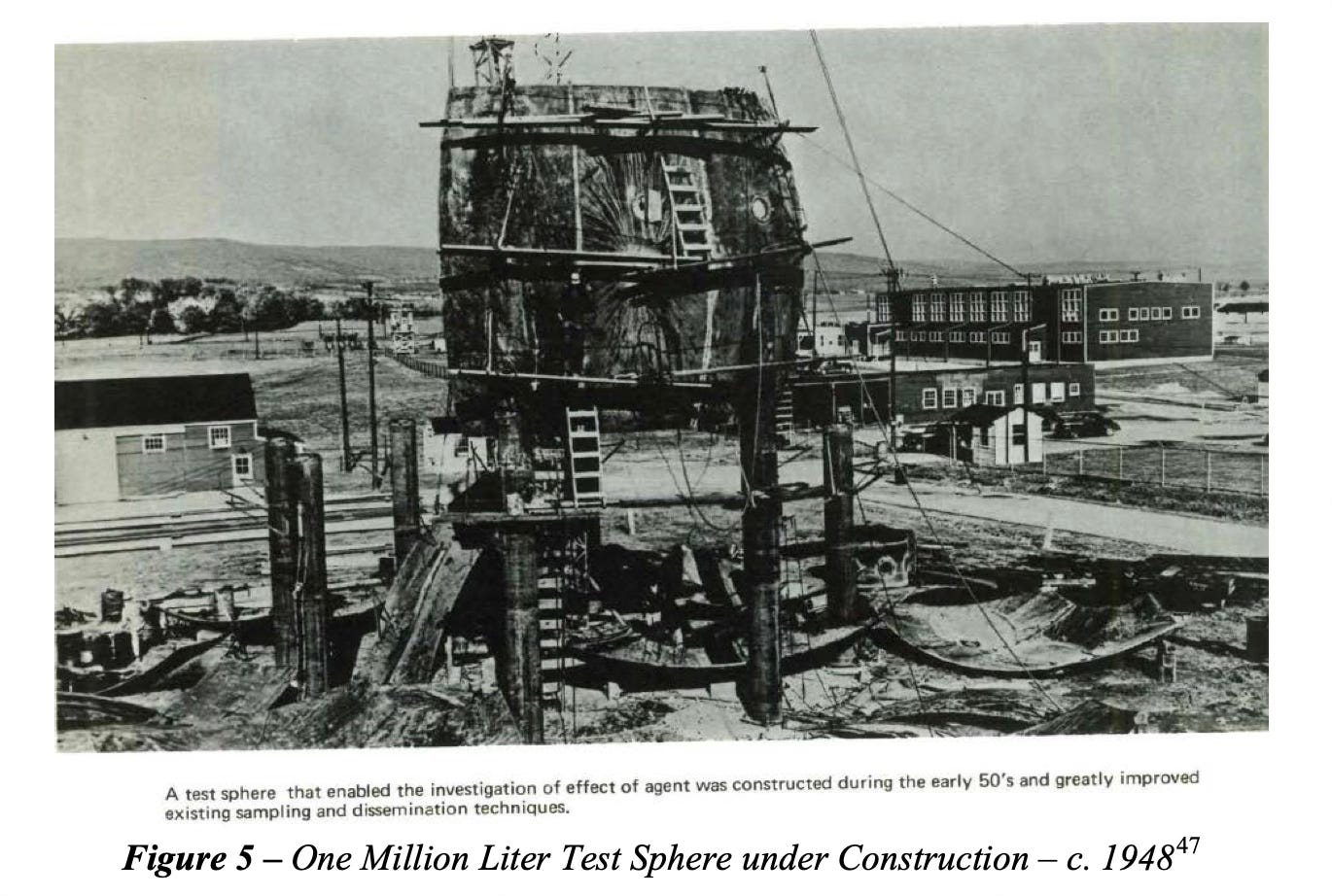
The Army COE report originated with a tasking from U.S. Army Environmental Command and the U.S. Army Garrison, Fort Detrick in August 2010. The request followed significant public concern about the kinds of biological and chemical agents that may have been released at Fort Detrick in the process of research, development, testing and evaluation of such agents during and since World War II. (Until 1956, Fort Detrick was known as Camp Detrick.)
According to the COE report, BW testing was limited at Detrick itself.
BW testing using agents and simulants that mimicked an agent included small scale laboratory tests and tests within enclosed chambers located inside buildings. Larger-scale open-air field tests conducted at Detrick were limited to use of BW simulants or a limited amount of anti-crops agents. Army installations located elsewhere provided large-scale production facilities or field locations for pathogen tests. Investigators Tests conducted with the pathogenic agents included bacteria, rickettsia, viruses, fungi, or toxins derived from living organisms.
Following WWII, the mission remained essentially the same even as the Army renamed the organization the Biological Warfare Laboratories (BWL), U.S. Army Biological Laboratories and variations thereof and upgraded the post designation to Fort Detrick in 1956. In the 1940s-1950s, the Army increased the size of the installation, which currently covers 1,153.13 acres on four non-contiguous parcels: the built-up main post (Area A), a field test grid (Area B) and separate water and sewage treatment plants on the Monocacy River (Area C). [Pages ES-1 to ES-2]
Other Areas of Biological Testing and Development
“Large-scale production facilities or field locations for pathogen tests” and production outside Detrick included the Vigo Ordnance Plant in Indiana (World War II only); the Horn Island Testing Station in Mississippi; and the Granite Peak Installation, some 250 square miles of remote desert, part of the Army’s Dugway Proving Ground in Utah.
Usually ignored in histories of U.S. biological weapons testing was the fact that both the U.S. and Great Britain used the Canadian military’s Suffield Experimental Station facilities in Alberta to test biological agents and munitions. Opened in 1941, the Suffield complex extended over 2,600 square kilometers (1000 square miles).
Joint use of Suffield’s testing grounds was part of a tripartite agreement between Canada, the U.S. and Great Britain on BW testing during World War II. The agreement was renewed during the early Cold War and testing continued on agents developed at Detrick for many years, as I described in a June 2024 article.
Besides the sites listed above, some BW testing took place at U.S. Air Force sites. In June 2000, the U.S. Air Force Research Laboratory released a “Report of Investigation: The Presence of Biological and Chemical Warfare Materiel at AFMC Bases Within the United States.” Like the COE report, this very interesting investigation also followed an environmental review of BW activities at a number of existing and former military sites. In this case, the targeted sites for examination belonged to U.S. Air Force Materiel Command. Two bases were identified that had or may have had BW testing on their grounds: Wright Air Development Center in Ohio, and Eglin Air Force Base in Florida.

.jpg)
Code Names for Biological Agents
The various biological agent code names are presented below in alphabetic order, as found in Rexmond Cochrane’s, November 1947 monograph, “Biological Warfare Research in the United States,” Volume 2, pp. 518-519, and the U.S. Army Corps of Engineers June 2014 report, “Archives Search Report (ASR): Operational History for Potential Environmental Releases: Fort Detrick,” pages 33-38.
Items marked with an asterisk reference additional BW agents as discussed in Weapons System Evaluation Group [WSEG] Report No. 8, “An Evaluation of Offensive Warfare Weapons Systems Employing Manned Aircraft, Enclosure ‘E’, Characteristics of Anticrop Agents, Munitions, and Weapons Systems”, pg. E-32. Also, I have included a few code names for chemical agents that are often seen in scattered documents that discuss biological weapons and agents.
The March 2026 updated or added BW agent codes are integrated into the article’s original list below, and are marked by a double dagger marker: ‡
African Swine Fever — Code “FW”‡
Agents injurious to rice — Code “II”
Anthrax — Code “N”
Aspergillus fumigatus — Code “AF”‡
Bacillus atrophaeus aka B. globigii — Code “BG” [“Its original and still most prominent use is as a surrogate organism for pathogenic B. anthracis [anthrax], beginning in the U.S. bio-weapons program….” (link)]
Blastomyces brasiliensis, aka Paracoccidioides brasiliensis — Code “LB”‡ (causes Paracoccidioidomycosis, which presents with lung, mouth, and throat lesions
Botulism — Code “X”
Bovine Diarrhea — Code “BV”‡
Brown Spot of Rice — Code “E”
Brucellosis — Code “US”
Chikungunya Virus — Code “KG”‡ (incapacitating mosquito-transmitted disease)
Cholera — Code “HO”
Coccidioides, aka San Joaquin Valley fever — Code “OC” [Note that the fungus that causes the infection known as San Joaquin Valley fever is known as Coccidioides immitis, which Detrick gave its own agent code: “CI”‡]
Colorado Tick Fever — Code “UA”‡
Corynebacterium diphtheriae — Code “DX”,‡ this is the bacterium that causes diphtheria
Dysentery aka Shigella dysenteriae — Code “Y”
Eastern Equine Encephalitis — Code “ZX”‡
Experimental Agent, generic — Code “EA” [The acronym may also have stood for “Edgwood Arsenal,” and usually described chemical compounds. Examples include EA 1729 and EA 3528 for LSD; EA 1701 for VX nerve gas; and EA 2277 for the incapacitating agent BZ (link).]
Feathers as Agent Carrier* — Code “M1”
Foot and Mouth Disease — Code “OO”
Fowl Plague & Newcastle Disease — Code “CE” (alternate code for fowl plague was Code “OE”‡, and for Newcastle Disease, Code “NI” and sometimes “NC”‡)
Glanders — Code “LA”
Hog Cholera — Code “OH”‡
Influenza — Code “DE”‡
Japanese Type B Encephalitis — Code “AN”
Late Blight of Potato — Code “LO”
Mass Culture of Spores — Code “AU”
Melioidosis, aka Whitmore’s Disease — Code “Hi”
Monkey Virus — Code “MB”‡
Mussel Poisoning — Code “SS”
Neurotropic encephalitises — Code “NT”
O’nyong-nyong virus (ONNV) — Code “ON”‡ (a sometimes fatal mosquito-borne disease)
Plague — Code “LE”
Plant Growth Regulating Substance — Code “LN” [There were a number of subtypes of these; for example, 2,4-Dichlorophenoxyacetic acid (2,4-D) was codenamed “LN8”]
Poliomyelitis (Polio) — Code “RO”‡
Psittacosis, aka “Parrot Fever” — Code “Si”
Q Fever — Code “OU”‡
Rabies — Code “KS”
Rice Blast — Code “IR”, also “LX”‡
Ricen Toxin — Code “RT”‡
Rickettsiae — Code “RI”
Rift Valley Fever — Code “FA”‡
Rinderpest — Code “R” or “GIR 1”
Rye Rust — Code “SX”‡
Salmonella aka Salmonella typhosa — Code “ZO”‡
Sclerotium Rot, aka Southern Blight — Code “C” or “Co”
Scrub Typhus — Code “MH”‡ [Caused by Rickettsia tsutsugamushi, aka Orientia tsutsugamushi, transmitted via mite or chigger bite, can have serious complications]
Shellfish Poison — Code “TZ”
Smallpox — Code “ZL”‡
Sporotrichum schneckii aka Sporothrix schenckii — Code “OY”‡ (causes the skin infection, Sporotrichosis)
Staphylococcal Enterotoxin B — Code “PG”‡ (causes food poisoning)
Stem Rust*, aka cereal rust, specifically Puccinia graminis tritici (causes disease in cereal crops, wheat, barley, triticale) — Code “TX”
Tularemia — Code “UL” [Note: “Pasteurella tularensis (Strain 425)” had its own code: “JT”‡; another code for it appears to have been “TT”‡]
Typhus — Code “YE”
Venezuelan Equine Encephalitis — Code “LS”, also “NU”‡
Vesicular exanthema of swine virus (VESV)2 — Code “EK”‡
Vesicular Stomatitis — Code “ET”‡ [Affect primarily horses and cattle, usually non-fatal
Western Equine Encephalitis — Code “EV”‡
Yellow Fever — Code “OJ”, or “OI”‡ if referring to the pathogen with mosquito vector
Zinc Cadmium Sulfide — Code “FP”‡ (a florescent particle used “to provide a visual count of aerosol particles” suspended in a BW aerosol cloud)
Portions of this article were adapted and updated from an earlier article originally published as “Secret Report: US Military Approved Offensive Use of Biological Warfare on Enemy Agriculture in World War 2,” published at Medium.com on May 14, 2018. An updated version was published at Hidden Histories on April 11, 2025.
The Archives Search Report (ASR) includes this description for the list of offered BW agent codes:
A comprehensive listing of BW agents and the specific strains studied at Detrick over time is not available. The following table covers the BW agents assigned BW Agent Symbols by the Chemical Corps Technical Committee in the 1950s (i.e. the most significant ones)92 or were identified in this ASR investigation as occurring at Detrick (note this list also includes anti-crops pathogens and chemicals). [page 34]
According to a 2015 fact sheet on VESV prepared by the Center for Food Security and Public Health, at the College of Veterinary Medicine, Iowa State University, “VESV-induced vesicular disease is clinically indistinguishable from vesicular disease caused by foot-and-mouth disease virus, vesicular stomatitis virus, swine vesicular disease virus, or Seneca Valley virus.” It has a mortality rate of 90 percent.